
Sauces & Condiments
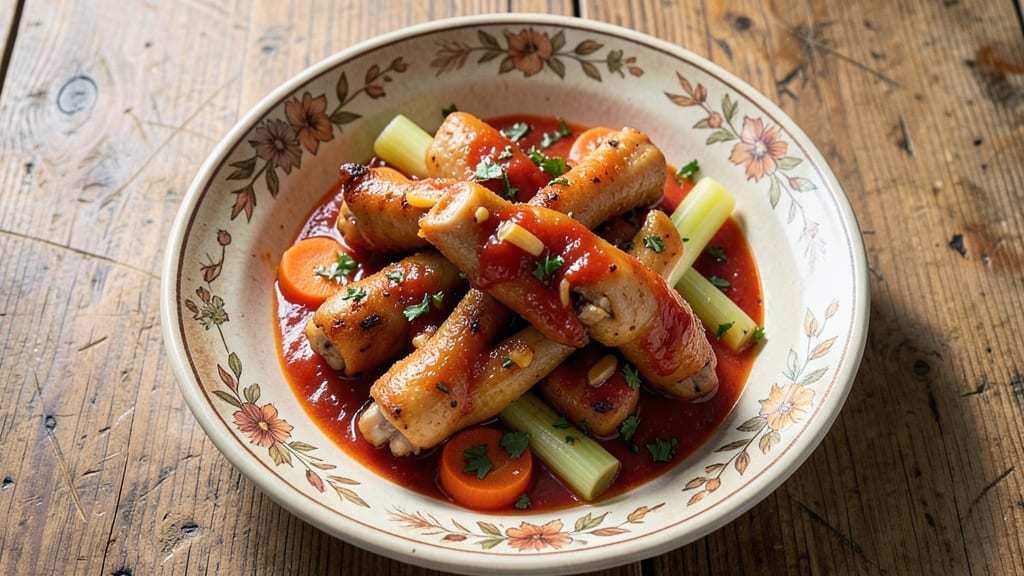
This chicken feet in tomato sauce recipe transforms humble ingredients into a dish that delivers crispy, savory bites with a rich, umami-packed sauce that clings to every tender piece.
The secret lies in a precise cooking method—first boiling to remove impurities, then simmering until the collagen-rich feet become melt-in-your-mouth tender while developing that signature crispy texture. What starts as a simple protein ends up as a restaurant-worthy dish that’s surprisingly easy to master at home.
The sauce itself is where the magic happens—a balanced blend of tomatoes, aromatics, and a touch of sweetness that enhances the natural depth of the chicken feet.
Unlike traditional recipes that rely on hours of slow cooking, this method streamlines the process without sacrificing flavor, making it perfect for weeknight dinners or special occasions. The result is a dish that’s both comforting and sophisticated, with a texture contrast you won’t find in everyday cooking.
By the time you’re done, you’ll have golden, crispy chicken feet with a glossy tomato sauce that’s rich enough to coat every bite. The sauce reduces to a perfect consistency, clinging to the meat while still offering a spoonful of tangy, aromatic depth.
This is the kind of dish that transforms a simple meal into an experience—one that’s worth the effort for the satisfaction of creating something truly special.
Pair it with steamed rice or crusty bread to soak up every last drop of that flavorful sauce. Whether you’re exploring new flavors or revisiting a classic, this recipe delivers professional-quality results with minimal fuss.
Let’s get started on creating a dish that’s as rewarding to make as it is to eat.
Ingredients for chicken feet with tomato sauce
Quality ingredients transform simple chicken feet into restaurant-worthy umami bites with crispy texture and rich tomato sauce.
| Ingredient | Amount | Notes |
|---|---|---|
| Chicken Feet 🦶 | 2 lbs | Fresh, cleaned and trimmed |
| Canned San Marzano Tomatoes 🍅 | 2 cans | 28 oz each, crushed by hand |
| Garlic Cloves 🧄 | 6 cloves | Peeled, minced for sauce |
| Yellow Onion 🧅 | 1 whole | Medium, thinly sliced |
| Carrots 🥕 | 2 whole | Medium, sliced into rounds |
| Celery Stalks 🌿 | 2 whole | Cut into 1-inch pieces |
| Bay Leaves 🍃 | 2 whole | Fresh for best flavor |
| Dried Oregano 🌿 | 1 tbsp | Italian variety preferred |
| Red Wine 🍷 | 1 cup | Dry, like Cabernet |
| Tomato Paste 🍅 | 2 tbsp | Squeeze tube preferred |
| Granulated Sugar 🍬 | 1 tbsp | Balances acidity |
| Olive Oil 🫒 | 3 tbsp | Extra-virgin for frying |
| Salt 🧂 | 2 tsp | Kosher or sea salt |
| Black Pepper 🌶️ | 1 tsp | Freshly ground |
| Balsamic Vinegar 🍶 | 1 tbsp | For finishing touch |
The chicken feet are the star—look for plump, firm pieces with minimal odor (a slight natural scent is normal). Asian markets often carry the best selection, but high-quality butchers will have them too. Avoid any with a strong ammonia smell, which indicates poor freshness. For the tomatoes, San Marzano cans deliver the sweetness and acidity balance this dish needs. If you can't find them, any high-quality crushed tomatoes will work, but avoid the watery, low-acid varieties. The aromatics—onion, garlic, carrots, and celery—should be fresh; yellow onions add natural sweetness that complements the sauce's depth.
No red wine? Substitute with extra beef broth plus a splash of balsamic vinegar—it mimics the acidity and depth. Fresh bay leaves are ideal, but dried works at half the quantity if that's what you have. The tomato paste can be skipped if you're using a particularly rich tomato product, but it adds that concentrated umami punch. For the sugar, honey or maple syrup are good alternatives if you prefer natural sweeteners. The olive oil is critical for both frying the feet and finishing the sauce—use extra-virgin for the best flavor profile. If you're short on time, pre-minced garlic and onion work, though fresh always tastes better.
This dish rewards patience—simmering the sauce low and slow develops the flavors beautifully. The sauce keeps well in the fridge for 5-6 days in an airtight container, though it tastes even better the next day as the flavors meld. For longer storage, freeze portions in single-serving containers for up to 3 months. The crispy chicken feet are best served immediately, but you can reheat them gently in the oven at 350°F (175°C) for 5-10 minutes to restore their crunch. Pair with freshly cooked rice or crusty bread to soak up every last bit of that rich sauce.
Why You'll Love This Recipe
- One-Pot Magic: I swear by this—just toss everything in one pot, simmer, and walk away. The chicken feet soften perfectly while the sauce thickens, no flipping or fussing required. Honestly, my slow cooker does most of the work while I prep dinner.
- Umami Bomb: That combo of San Marzano tomatoes and garlic? It’s like a flavor explosion in your mouth. The crispy skin on the chicken feet gives way to tender meat, and the sauce clings to every bite—salty, sweet, and deeply satisfying.
- Leftovers? More Like Leftovers: Make a double batch, and you’ve got lunch for days. The sauce gets richer overnight, and reheating it? Just a quick stir—no soggy textures, just that same bold flavor. My freezer’s always stocked with portions for lazy mornings.
Step-by-step instructions for chicken feet in tomato sauce
This method delivers perfectly crispy chicken feet with a deeply flavorful tomato sauce—simple steps, bold results.
Prepare the Chicken Feet for Crispy Perfection
Begin by thoroughly cleaning the 2 lbs chicken feet under cold running water, scrubbing between the joints to remove any remaining debris. Pat them completely dry with paper towels, ensuring no moisture remains—this is critical for achieving crispy skin. Place the cleaned feet in a bowl and season generously with 2 tsp salt and 1 tsp black pepper, rubbing the mixture into every crevice. Let them sit at room temperature for 30 minutes while you prepare the sauce.
Real talk: Don't skip the drying step. Even small amounts of moisture will prevent the feet from crisping properly. I press down firmly on the joints with a paper towel to absorb any lingering dampness. This pre-seasoning also helps the skin develop a deep golden crust during cooking.
Build the Flavorful Tomato Base
Heat 3 tbsp olive oil in a large Dutch oven over medium heat. Add the 1 whole yellow onion, 2 whole carrots, and 2 whole celery stalks, all cut into even pieces. Cook for 8-10 minutes until the vegetables soften and the onion becomes translucent. Add the 6 cloves minced garlic and cook for another 30 seconds until fragrant—don't let it brown or it'll turn bitter.
Stir in the 2 tbsp tomato paste and cook for 2 minutes to develop its rich flavor. Pour in the 2 cans canned San Marzano tomatoes (crushed by hand) and add 1 tbsp dried oregano, 2 whole bay leaves, and 1 tbsp granulated sugar. Bring to a gentle simmer, then reduce heat to low and let it cook uncovered for 20 minutes, stirring occasionally. This builds a concentrated, flavorful base that will carry through the entire dish.
Parboil and Crisp the Chicken Feet
While the sauce simmers, fill a large pot with enough water to cover the 2 lbs chicken feet by 2 inches. Bring to a rolling boil and carefully add the seasoned feet. Return to a boil and cook for 15 minutes to partially cook them and remove any impurities. Drain and rinse briefly under cold water, then pat them completely dry again. This step ensures they're fully prepped for crisping without becoming rubbery.
Here's the moment that matters: Heat 1 tbsp olive oil in a heavy skillet over medium-high heat until shimmering. Working in batches to avoid crowding, add the parboiled feet and cook for 8-10 minutes per side until they develop a deep golden-brown crust. You're aiming for crispy, caramelized skin—this is where the magic happens. Transfer the crispy feet to a paper towel-lined plate to drain excess oil.
Simmer the Feet in Tomato Sauce
Return the sauce to a gentle simmer in the Dutch oven. Carefully add the crispy chicken feet, along with any accumulated juices from the skillet. Pour in the 1 cup red wine and scrape up any browned bits from the bottom of the pot—these contain concentrated flavor. The sauce should just barely cover the feet. Simmer uncovered for 45-60 minutes on low heat, turning the feet occasionally to ensure even cooking and sauce absorption.
You'll know it's done when the feet are tender enough to pull apart easily at the joints and the sauce has thickened into a rich, glossy consistency. The feet should float effortlessly in the sauce, indicating they're fully cooked through. If the sauce becomes too thick, add 2-3 tablespoons of water to maintain the right balance.
Finish with Umami Depth and Serve
Remove the chicken feet from the sauce and transfer them to a serving platter. Strain the sauce through a fine-mesh sieve to remove the bay leaves and any vegetable pieces, then return it to the pot. Stir in the 1 tbsp balsamic vinegar and simmer for 3-4 minutes to intensify the flavors. Taste and adjust seasoning with additional salt or black pepper if needed.
To serve, spoon the rich tomato sauce over the crispy chicken feet, ensuring each piece is generously coated. The contrast between the crispy exterior and tender interior, paired with the deep, umami-rich sauce, makes this dish unforgettable. Serve immediately with crusty bread to soak up every last drop of that flavorful sauce.
Pro Tips For Making Chicken Feet With Tomato Sauce
- Blanching Feet First: Drop those chicken feet in boiling water for 3-4 minutes before braising—it softens the skin and cuts cooking time by half. I learned this the hard way after spending 2 hours trying to tenderize them dry.
- Crush Garlic Like Mad: Use a flat-sided knife or mortar to smash garlic cloves into a paste, not just minced bits—this releases more flavor into the tomato sauce. My grandmother swore by this, and she was right: the sauce tastes deeper.
- Don’t Rush the Tomatoes: Simmer the San Marzano sauce uncovered for the first 10 minutes to burn off excess acid—this balances the sweetness and prevents a sour finish. Skipping this step makes the dish taste underripe.
- Carrot Chunks Matter: Cut carrots into ½-inch chunks (not slices) so they stay intact but still soften—this keeps the sauce from turning into a veggie mush. I was skeptical until I tried it: texture stays perfect.
Regional styles of this recipe
Asian Street Food Style
In Southeast Asia, chicken feet in tomato sauce often take on a spicier, sweeter profile with influences from Thai and Vietnamese street food.
Start by adding 1 tbsp fish sauce and 1 tsp palm sugar to the tomato base, then stir in 1-2 tbsp chopped Thai bird’s eye chilies (adjust to taste). For extra depth, finish with 1 tbsp lime juice and cilantro leaves—this brightens the rich sauce while keeping it vibrant.
Serve with steamed jasmine rice and a side of pickled vegetables for that classic street-food balance. 🌶️
Southern Italian Adaptation
For an authentic Italian twist, replace the red wine with ½ cup dry white wine (like Pinot Grigio) and add 1 tsp red pepper flakes to the sauce. Swap the oregano for 1 tsp dried basil and finish with fresh basil leaves torn over the top.
The Italians often serve this with al dente spaghetti tossed in the sauce or as a filling for panini rolls with provolone cheese and roasted red peppers. This version leans into the tomato-forward, herbaceous profile that defines Italian comfort food. 🍝
Chinese Five-Spice Fusion
Chinese cuisine transforms this dish by incorporating five-spice powder (½ tsp) and star anise (1 pod) into the sauce. Add 1 tbsp soy sauce and 1 tsp Shaoxing wine for umami depth, then finish with sesame oil and toasted sesame seeds.
The feet are often deep-fried until extra crispy before simmering, creating a textural contrast that’s beloved in Cantonese cuisine. Pair with sticky rice and steamed bok choy for a complete meal. This version highlights the warm, aromatic spices that define Chinese comfort dishes. 🌟
Mexican-Inspired Salsa Roja
For a bold Mexican adaptation, replace the tomato sauce with salsa roja (blend 2 Roma tomatoes, 1 jalapeño, ½ red onion, and 1 garlic clove). Add 1 tsp cumin, ½ tsp smoked paprika, and ½ cup chicken broth to the sauce.
Finish with cotija cheese crumbles and avocado slices on top. The smoky, spicy profile pairs perfectly with warm corn tortillas or cilantro-lime rice. This version keeps the crispy texture but infuses it with fiery, citrusy Mexican flavors. 🌶️🔥
Korean Gochujang Twist
In Korea, this dish often features gochujang (Korean red pepper paste) for a sweet, spicy kick. Stir 2 tbsp gochujang into the tomato sauce along with 1 tbsp soy sauce and 1 tsp honey. Add 1 tsp grated ginger and 1 clove minced garlic for warmth.
Garnish with sesame seeds and green onions. Serve with steamed white rice and kimchi to balance the rich, spicy sauce. This version is a fusion of textures and flavors that’s gaining popularity in Korean street food scenes. 🌶️✨
Nutrition facts
Frequently asked questions
Why do chicken feet need to be parboiled before cooking?
Parboiling removes impurities, blood, and any lingering odors that can affect the final flavor. It also partially cooks the meat, ensuring they become tender during the long simmer without becoming rubbery. Skipping this step can leave your dish tasting bitter or undercooked.
Can I make this recipe without red wine?
Substitute with ½ cup beef broth plus 1 tbsp balsamic vinegar for similar depth. The vinegar mimics the acidity while the broth adds richness. If you prefer a completely alcohol-free version, use extra tomato paste or a splash of lemon juice instead.
How do I get the chicken feet extra crispy?
Focus on three key steps: thorough drying before seasoning, high-heat frying in small batches until golden brown, and avoiding overcrowding in the skillet. For extra crunch, pat them dry again after parboiling and fry them a second time before simmering in the sauce.
What's the best way to store leftovers?
Store the sauce and feet separately in airtight containers in the fridge for up to 5 days. Reheat the sauce gently on the stove, then crisp the feet fresh in a hot skillet for 2-3 minutes per side. For longer storage, freeze the sauce for 3 months—just thaw overnight before reheating.
Can I use frozen chicken feet instead of fresh?
Yes, but thaw them completely first in the fridge (never at room temperature). Rinse them thoroughly after thawing to remove any ice crystals, then follow the same preparation steps. Frozen feet may require 5-10 extra minutes of simmering time to reach full tenderness.