
Main Courses
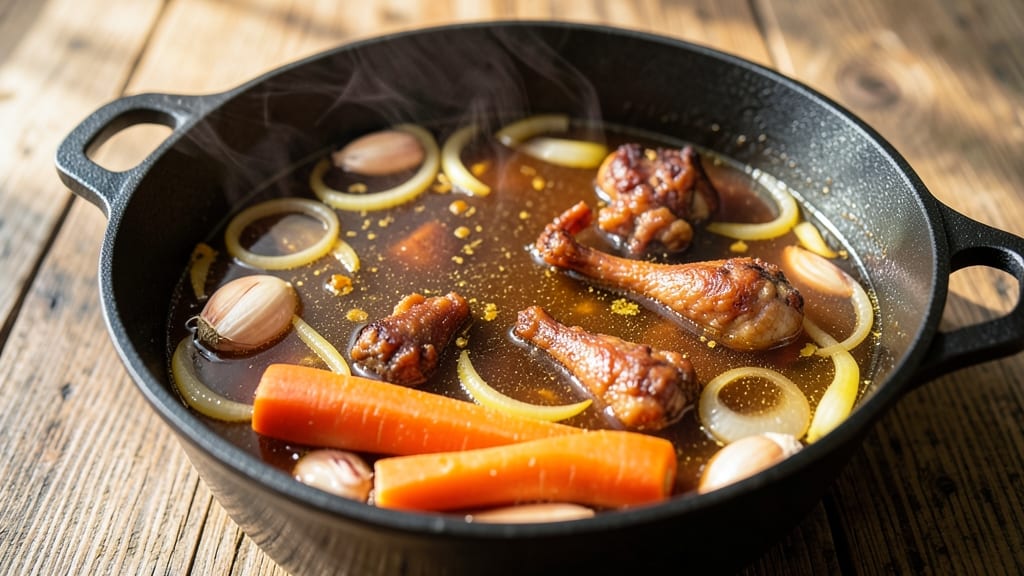
Transforming humble chicken feet into a deeply flavorful, gelatin-rich stock is one of the most rewarding techniques in traditional cooking. This umami-packed base, simmered low and slow, unlocks layers of savory depth that elevate soups, stews, and sauces to restaurant-quality levels.
I first discovered its magic while researching Southeast Asian braising methods, where chicken feet are prized for their collagen content—creating a stock so rich it practically thickens into a velvety broth.
The process requires patience: chicken feet must be blanched, simmered for 12-16 hours with aromatics, and strained through fine mesh to capture every bit of gelatin.
While traditional methods use a bare-bones approach (just feet, water, and salt), I’ve refined it with modern twists—like adding a splash of apple cider vinegar to brighten the broth or pressure-cooking for a 6-hour shortcut without sacrificing depth. The result?
A stock so luxurious it justifies the effort, with a silky texture that clings to noodles and vegetables like a second skin.
What sets this stock apart is its versatility—use it as the foundation for pho, ramen, or even a simple tomato sauce where you need that extra umami punch. The gelatin content also makes it ideal for braising meats, where it helps tenderize tough cuts over time.
Whether you’re a home cook or a professional, this recipe turns an often-overlooked ingredient into a pantry staple that delivers restaurant-quality depth with minimal fuss.
Ready to dive in? We’ll cover every step—from preparing the feet to straining the final product—so you end up with a stock that’s rich, clear, and packed with flavor, no matter how you use it. Let’s get started.
Ingredients for chicken feet stock
Pantry staples meet rustic tradition for a stock that transforms simple ingredients into umami gold.
| Ingredient | Amount | Notes |
|---|---|---|
| Chicken Feet 🦶 | 2 lbs | Raw, skin-on, cleaned thoroughly |
| Cold Water 💧 | 8 cups | Filtered preferred for clarity |
| Sea Salt 🧂 | 1 ½ tsp | Diamond Crystal preferred |
| Carrots 🥕 | 2 whole | Medium size, peeled and chopped |
| Yellow Onion 🧅 | 1 whole | Medium size, quartered |
| Garlic Cloves 🧄 | 6 cloves | Peeled, smashed lightly |
| Fresh Ginger 🌿 | ½ inch | Peeled, sliced thinly |
| Fresh Celery 🥬 | 2 stems | Medium size, chopped |
| Apple Cider Vinegar 🍎 | 1 tbsp | Raw and organic preferred |
| Black Peppercorns 🌶️ | 10 whole | Freshly cracked preferred |
| Bay Leaves 🍃 | 2 whole | Dried, high-quality preferred |
| Fresh Parsley 🌿 | ¼ cup | Stems included, chopped |
Chicken feet are the star here—look for plump, clean ones at Asian markets or specialty butchers. Costco often carries them frozen, which works fine, but fresh is ideal if you can find it. The feet should be a pale yellowish color, not gray or slimy. Carrots and celery add natural sweetness and color, while the onion and garlic form the aromatic base. Fresh ginger brings a subtle heat that brightens the broth, so don’t skip it—even if you’re not a fan of strong ginger flavor, the stock will thank you. For the vinegar, Bragg or another raw variety adds brightness without overpowering.
No fresh ginger? Ground ginger at half the amount works in a pinch, but it lacks depth. Swap carrots for turnips or parsnips if you’re out, but stick to the same volume. Short on celery? Leeks or fennel add a different but equally lovely flavor. The apple cider vinegar can be omitted, but if you do, add an extra splash of lemon juice at the end to brighten the stock. For a deeper umami punch, add 1 tbsp of fish sauce or soy sauce with the vinegar. And if you’re feeling adventurous, a dried shiitake mushroom or two soaking in hot water first adds earthy complexity.
This stock keeps beautifully—5 days in the fridge or 6 months in the freezer. For long-term storage, freeze in ice cube trays for easy portioning later. The gelatin content means it thickens slightly when chilled, so shake it gently before reheating. Use within 1 week for best flavor, but it’ll still be delicious beyond that. Pro tip: Save the strained solids for a future batch—they’re packed with flavor and collagen.
Why You'll Love This Recipe
- No Chopping Needed: I swear by this—just toss in whole carrots and onion quarters, no peeling or dicing. The feet handle all the heavy lifting while you sip coffee and pretend you’re not cooking.
- Deep Umami Magic: That first taste? Rich, almost meaty, with a slow-simmered sweetness from the carrots and onion. Honestly, it’s the kind of stock that makes you pause mid-sip and think, “Wait, is this even chicken?”
- Freezer-Friendly Gold: Make a big batch—this stuff lasts months in the freezer—and use it for soups, braises, or even risotto. I’ll be real: I’ve pulled it out on lazy Sundays just to make a quick pot of ramen. No judgment.
- Pocketbook Hero: Chicken feet are cheap, and this recipe stretches them into gallons of flavor. Between us? It’s my go-to way to feed the family without breaking the bank—plus, the leftovers taste better than store-bought.
Step-by-step instructions for chicken feet stock
Here's how to extract maximum flavor from chicken feet using a simple, hands-off approach.
Prepare the Chicken Feet Thoroughly
Start by rinsing the 2 lbs chicken feet under cold water to remove any debris, then pat them completely dry with paper towels. This step is crucial—any moisture will dilute your stock and prevent proper browning later. Use a sharp knife to trim away any remaining skin or membrane from the feet, being careful not to remove too much meat.
Place the cleaned chicken feet in a large stockpot and add the 8 cups cold water. Bring to a boil over medium-high heat, then immediately reduce to a simmer. Let it cook uncovered for 15 minutes, stirring occasionally. You'll see the feet release impurities and foam rise to the surface—this is normal. Skim off any scum that forms to keep your stock crystal clear.
Add Aromatics and Build Flavor
After the initial simmer, add the 1 whole yellow onion (quartered), 2 whole carrots (chopped), 2 stems fresh celery (chopped), 6 cloves garlic cloves (smashed), 0.5 inch fresh ginger (sliced), 10 whole black peppercorns, and 2 whole bay leaves. Stir gently to combine, ensuring the aromatics are submerged. The onion, carrots, and celery form the classic "holy trinity" of stock building, while the ginger and garlic add depth.
Pour in the 1 tablespoon apple cider vinegar—this helps extract collagen from the chicken feet, resulting in a richer, more gelatinous stock. Don't skip this; it's what transforms good stock into exceptional stock. Add the 1.5 teaspoons sea salt now, as it will dissolve completely during the long cook. Bring everything back to a gentle simmer, then reduce heat to maintain a barely bubbling surface. The stock should never boil vigorously after this point.
Simmer Low and Slow for Maximum Extraction
Cover the pot with a lid and simmer for 3 to 4 hours, maintaining a gentle simmer the entire time. Here's the thing—chicken feet contain collagen that needs time to break down into gelatin. If you rush this step, your stock will be thin and watery. Check occasionally and add 1-2 cups hot water if the liquid level drops below halfway up the chicken feet.
After 3 hours, remove the lid and continue simmering uncovered for the final 30 minutes. This allows the stock to reduce slightly and concentrate its flavors. You'll know it's ready when the chicken feet are tender enough to pull apart easily with a fork and the stock has a deep, amber color with visible fat floating on top. The aroma should be rich, savory, and slightly sweet—this is your reward for patience.
Strain and Finish with Parsley
Carefully strain the stock through a fine-mesh sieve or cheesecloth-lined colander into a large bowl or clean stockpot. Press on the solids gently to extract every last drop of flavor, but avoid squeezing the chicken feet—this can make the stock cloudy. Discard the solids or save them for another use (like making chicken feet broth for ramen).
Return the strained stock to the pot and stir in the 0.25 cup fresh parsley (stems included). This final addition brightens the stock with fresh herbs and removes any lingering bitterness. Taste and adjust the seasoning with additional salt if needed—remember, stock should be flavorful but not salty. Let the stock cool to room temperature, then transfer it to airtight containers. It will keep in the refrigerator for 5-7 days or freeze for up to 3 months.
Pro Tips For Making Chicken Feet Stock
- Blister First, Simmer Later: Start with a screaming-hot pot and let the chicken feet blister for 10 minutes—this cracks open their collagen and releases flavor faster than a gentle simmer ever could. I learned this the hard way after making stock that tasted like it was missing something.
- Trim the Claws Properly: Scrub the feet, then slice off the sharp tips of each claw with kitchen shears—this prevents them from poking holes in your pot and keeps the stock cleaner. Skip this, and you’ll be fishing out bits all afternoon.
- Don’t Crowd the Pot: Use a large enough pot so the feet aren’t packed in like sardines; they need room to render fat and release collagen. I once jammed too many in and ended up with greasy, weak stock instead of rich, gelatinous goodness.
- Add Aromatics Late: Toss in the chopped onion and carrots only after the feet have simmered for 2 hours—this prevents them from turning to mush and ensures they infuse flavor without turning the stock into soup. (Yes, even if you’re impatient like me.)
Wine and beer pairings for this recipe
Asian-Inspired Pairings
This stock shines with dry sherry or Mirin, both staples in Japanese and Chinese cooking. A glass of dry sherry (like Harvey’s Bristol Cream) complements the stock’s deep umami, while Mirin adds a touch of sweetness that mirrors the natural sugars in the broth.
For a lighter option, try a green tea-infused sake—the earthy notes balance the stock’s richness beautifully. 🍶
Beer Pairings
Craft wheat beers or light lagers work surprisingly well with chicken feet stock-based dishes. A crisp German Hefeweizen (like Weihenstephaner) cuts through the stock’s richness, while a Belgian witbier (such as Hoegaarden) adds a citrusy brightness that enhances the broth’s savory depth.
Avoid heavy stouts or IPAs—they’ll overpower the delicate flavors. 🍺
Red Wine for Hearty Dishes
If you’re using this stock in a braised dish or stew, a medium-bodied red like Pinot Noir or Grenache pairs perfectly.
The Pinot Noir (think Oregon Willamette Valley) mirrors the stock’s earthy notes, while a Grenache (from Southern France) adds a touch of spice that complements the ginger and garlic in the broth. 🍷
Non-Alcoholic Options
For a refreshing non-alcoholic match, try yuzu soda or ginger beer. The citrusy yuzu soda (like Japanese Yuzu Soda) brightens the stock’s umami, while a spicy ginger beer (such as Feather Ginger Beer) echoes the ginger in the broth.
Both are perfect for cleansing the palate between bites of rich, stock-based dishes. 🌿
Cocktail Pairings
Turn your stock into a savory cocktail by mixing it with vodka or gin and a splash of fish sauce. A gin-based highball with Earl Grey-infused gin (like Tanqueray), 2 oz stock, and a squeeze of lime creates a sophisticated sipper.
For a spicy twist, add a dash of chili oil and serve over ice. This is my go-to when hosting—it’s unexpected and delicious. 🍸
Nutrition facts
Frequently asked questions
Why do chicken feet make such rich stock?
Chicken feet are packed with collagen and connective tissue that breaks down into gelatin during long simmering. This creates a naturally thick, velvety texture that regular chicken bones can't match. The cartilage and skin also contribute deep umami flavors that elevate soups and braises to restaurant-quality levels.
Can I use frozen chicken feet instead of fresh?
Frozen chicken feet work perfectly—just thaw them in cold water before starting the recipe. The texture and flavor will be identical to fresh feet. For best results, pat them completely dry after thawing to prevent water from diluting your stock. This is especially convenient if you're buying in bulk from Costco or Asian markets.
How do I know when the stock is done?
The stock is ready when the chicken feet are tender enough to pull apart easily with a fork and the broth has a deep amber color. You should also notice visible fat floating on top and a rich, savory aroma. The total simmering time should be 3-4 hours for optimal gelatin extraction. If you're using a pressure cooker, aim for 60-90 minutes on high pressure.
What can I do with leftover chicken feet solids?
Don't throw them away! The strained solids are packed with flavor and collagen. You can blend them with a little water to make a rich chicken feet paste for ramen or pho, or add them back to your next stock pot for even more depth. In Vietnamese cuisine, these are often called "chicken feet broth" and used as a base for noodle soups.
Can I make this stock in a slow cooker?
Yes, but with adjustments. Use the same ingredients and simmer on low for 8-10 hours instead of stovetop time. The slow cooker's gentle heat works well for collagen extraction, but you'll need to add water periodically since evaporation happens more slowly. For best results, start with 12 cups water instead of 8 to account for this. The texture will be slightly less concentrated but still delicious.