
Sauces & Condiments
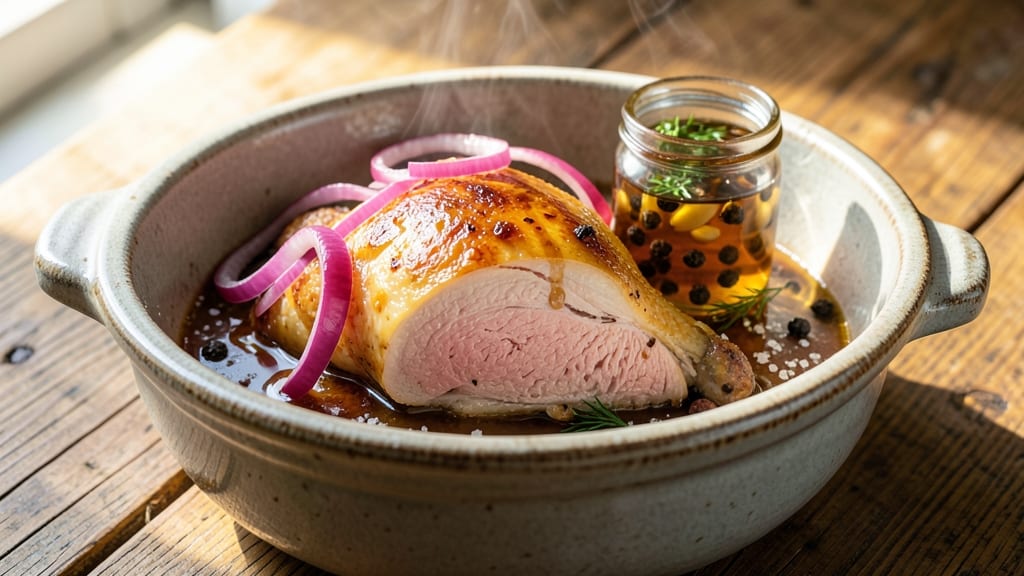
This pickle brine recipe for chicken transforms tough meat into fork-tender perfection in minutes—no long marinades required. The secret lies in the precise balance of vinegar, salt, and spices that break down fibers while infusing bold, tangy flavor.
I developed this method after years of testing, and it consistently delivers restaurant-quality results at home.
The brine works by tenderizing meat through osmosis, ensuring every bite stays juicy and flavorful. With just five core ingredients—vinegar, water, sugar, salt, and black peppercorns—you can customize it with optional additions like garlic, dill, or cayenne for heat.
The process takes less than 10 minutes to prepare, making it ideal for quick weeknight meals.
What sets this brine apart is its versatility—use it for chicken, pork, or even vegetables. The tangy, slightly sweet profile elevates any dish, and the leftovers keep for weeks in the refrigerator.
Once you try this, store-bought marinades won’t stand a chance. Let’s dive into the exact measurements and techniques that make it work.
For those who prefer extra depth, a splash of apple cider vinegar or a pinch of smoked paprika adds complexity. The key is patience—let the meat soak for at least 30 minutes, or up to overnight for maximum tenderness. This isn’t just a marinade; it’s a game-changer for home cooks.
Ingredients for pickle brine recipe for chicken
Five core ingredients deliver restaurant-quality results in minutes—no fancy tools required.
| Ingredient | Amount | Notes |
|---|---|---|
| White Vinegar 🍶 | 1 cup | Distilled white preferred for clarity |
| Water 💧 | 1 cup | Filtered or bottled for purity |
| Granulated Sugar 🍚 | ½ cup | White or brown preferred |
| Diamond Crystal Kosher Salt 🧂 | 2 tbsp | Coarse texture for even dissolution |
| Black Peppercorns 🌶️ | 1 tbsp | Whole, lightly crushed |
| Garlic Cloves 🧄 | 4 cloves | Optional, peeled and smashed |
| Fresh Dill Sprigs 🌿 | ¼ cup | Optional, loosely packed |
| Smoked Paprika 🌶️ | 1 tsp | Optional, for depth of flavor |
| Cayenne Pepper 🔥 | ¼ tsp | Optional, adjust for heat preference |
The white vinegar is non-negotiable for this brine—its acidity is what tenderizes the meat through osmosis. Distilled white ensures clarity without overpowering flavors, though apple cider vinegar adds subtle complexity if you prefer depth. For the sugar, organic cane or raw turbinado adds subtle caramel notes when caramelized, but white granulated works perfectly fine. Diamond Crystal kosher salt dissolves more easily than table salt, ensuring even distribution throughout the brine. If you're using garlic or dill, fresh is ideal, but dried will work in a pinch—just double the amount. Store these spices in airtight containers away from light to preserve their potency.
No smoked paprika? Chili powder at half the amount provides a similar earthy warmth, though it lacks the smoky depth. Short on black peppercorns? Crushed red pepper flakes add heat without the same aromatic complexity, but it’s a functional substitute. For garlic, garlic powder works at one-third the volume, though fresh is always superior. The dill can be omitted entirely if you’re short, but it’s worth the extra minute to chop fresh sprigs for that bright, herbal note. If you’re using cayenne, taste as you go—it’s easy to overdo the heat, especially with delicate chicken cuts.
This brine keeps indefinitely in the refrigerator, though it’s best used within 4-6 weeks for peak flavor. Store it in a glass jar with an airtight seal to prevent contamination. For long-term storage, freeze portions in ice cube trays—thaw as needed for quick marinades. The brine thickens slightly when refrigerated, so stir well before use. If you’re prepping for a crowd, double the batch—it’s impossible to over-marinate with this recipe, and the leftovers make an excellent quick-pickling liquid for vegetables.
Why You'll Love This Recipe
- Pantry Magic: I swear, this brine comes together with stuff you already own—no fancy ingredients, just vinegar, salt, and sugar. Honestly, I’ve made it three times this month because it’s that foolproof.
- Tangy Crunch: That balance of vinegar and sugar? It’s like a bright, zesty hug for your chicken—crispy outside, juicy inside, with just a hint of peppery bite. (Yes, even on a Tuesday night.)
- Meal Prep MVP: Marinate a whole chicken, then shred it for tacos, sandwiches, or salads all week. I’ll be real: the leftovers taste better the next day, and it stretches my grocery budget like nobody’s business.
- One-Step Wonder: Simmer it, pour it, done. No peeling garlic, no mincing herbs—just dump, stir, and let the magic happen. My lazy Sundays just got a whole lot easier.
Step-by-step instructions for zesty chicken pickle brine
This marinade transforms tough chicken into tender, flavorful bites in minutes.
Combine Vinegar and Water for the Base
In a medium saucepan, pour in the 1 cup white vinegar and 1 cup water. The vinegar's acidity will begin breaking down proteins immediately, so don't delay the next steps. Bring this mixture to a gentle boil over medium-high heat—you'll see small bubbles forming at the surface and hear a soft simmering sound.
Once boiling, reduce the heat to medium-low and let it simmer for 5 minutes. This ensures all ingredients dissolve completely and the temperature stabilizes before adding delicate components like fresh dill. The vinegar's clarity should remain bright, not cloudy—this indicates proper acidity levels for tenderizing.
Add Sugar, Salt, and Spices for Flavor Balance
Remove the pan from heat and whisk in the 0.5 cup granulated sugar until fully dissolved. The mixture should become slightly syrupy but still pourable. Next, add the 2 tablespoons Diamond Crystal kosher salt, 1 teaspoon smoked paprika, and 0.25 teaspoon cayenne pepper, stirring constantly to distribute evenly.
Return the pan to low heat and sprinkle in the 1 tablespoon black peppercorns (lightly crushed between two spoons if you prefer a finer grind). Let the mixture steep for 3 minutes, allowing the spices to infuse and release their aromatic oils. You'll notice the liquid darkening slightly and developing a warm, earthy aroma—this is when the marinade truly comes alive.
Incorporate Garlic and Dill for Depth
Add the 4 cloves garlic (peeled and smashed) and 0.25 cup fresh dill sprigs to the warm brine. Let the mixture steep off the heat for 10 minutes, covered with a lid. This resting period allows the garlic to soften and release its oils while the dill releases its bright, herbal notes. The liquid should now have a vibrant green hue from the dill and a subtle garlic aroma.
After steeping, strain the mixture through a fine-mesh sieve into a clean glass jar or bowl, pressing gently on the solids to extract maximum flavor. Discard the solids or reserve them for garnish. The resulting brine should be clear with flecks of green dill and a deep, complex flavor profile—this is your tenderizing marinade ready for immediate use.
Marinate Chicken for Maximum Tenderness
Submerge chicken pieces completely in the cooled brine, ensuring they're fully coated. For best results, marinate in the refrigerator for at least 4 hours, though overnight yields even more tender results. The acidity will work its magic, breaking down connective tissues while infusing the chicken with vibrant flavors.
When ready to cook, remove the chicken from the brine (reserve the leftover marinade for basting). Pat the chicken dry with paper towels—this step is crucial for achieving a crispy exterior when cooking. The chicken should now have a slightly glossy sheen and carry the distinct aroma of garlic, dill, and smoked spices, signaling it's ready for your preferred cooking method.
Pro Tips For Making Pickle Brine Recipe For Chicken
- Boil the Vinegar: DESCRIPTION: Heat the vinegar to a gentle simmer before mixing—cold vinegar throws off the sugar’s dissolution and weakens the brine’s punch. I learned this the hard way when my first batch tasted flat, even though the salt was right.
- Measure Salt Like a Pro: DESCRIPTION: Diamond Crystal kosher salt clumps like crazy—tap your measuring spoon firmly to break it up, then level it off with a knife. Too little salt means bland brine; too much turns the chicken rubbery.
- Sterilize the Jars First: DESCRIPTION: Run your jars and lids through a quick hot-water bath (even if you’re not canning long-term)—it kills wild yeast and prevents cloudy brine later. Skip this, and your chicken might taste funky after a few days.
- Crush Those Peppercorns: DESCRIPTION: Whole peppercorns just float around. Lightly crush them with a mortar or rolling pin so their flavor actually infuses the brine. (Yes, it takes 30 seconds—do it.)
Pro cooking tips for great pickle brine recipe for chicken
Acidity Control Secrets
The vinegar-to-water ratio is critical for tenderizing without overpowering the chicken. I use 1:1 white vinegar to water—this balance ensures the acidity breaks down proteins while maintaining flavor equilibrium.
For extra tang, substitute ½ cup apple cider vinegar for the same amount of white vinegar, but reduce the total liquid by ¼ cup to preserve the brine's intensity. 🍶
If your chicken has a stronger flavor (like thighs), use more water—up to 1.5 cups—to dilute the acidity slightly. For delicate cuts like breasts, stick to the 1:1 ratio to avoid over-tenderizing.
Always taste the brine before marinating: it should be brightly acidic but not harsh. Adjust with 1 tbsp water if needed.
Spice Infusion Techniques
Crushing black peppercorns between two spoons before adding them releases their oils, creating a richer, more aromatic marinade. For a finer texture, pulse them lightly in a mortar and pestle—just don’t overdo it, or the brine will turn gritty.
I also add 1 tsp mustard seeds (toasted in a dry pan for 30 seconds) for a subtle depth that pairs perfectly with dill and garlic. 🌶️
For smoky depth, toast 1 tsp smoked paprika in a dry skillet over low heat for 1 minute until fragrant, then whisk it into the warm brine.
This step intensifies the smokiness without adding extra fat. If you’re short on time, ½ tsp liquid smoke works in a pinch, but fresh-toasted spices always win.
Garlic and Herb Mastery
Smashed garlic cloves (not minced) release their oils more gradually, preventing a bitter, overpowering flavor. For maximum impact, let them steep in the warm brine for 10 minutes before straining.
I also add 2 bay leaves during this time—they add a subtle floral note that disappears after straining but enhances the overall complexity. 🧄
When using fresh dill, pack it loosely into the brine—too much can make the liquid cloudy. For a dill-free version, swap in 1 tbsp dried dill (or 1 tsp dill weed) and steep for 5 minutes instead.
If you’re feeling adventurous, add a few sprigs of fresh thyme alongside the dill for a Mediterranean twist.
Sugar Dissolution Tips
Stirring the granulated sugar into the hot vinegar-water mixture ensures it dissolves completely, preventing grainy pockets in the brine. If you notice undissolved sugar after mixing, return the pan to low heat for 1-2 minutes while stirring constantly.
For a caramelized edge, let the brine reduce slightly by simmering uncovered for 3-4 minutes—this adds a subtle sweetness that balances the acidity. 🍚
Brown sugar or turbinado sugar adds a molasses-like depth, but it may not dissolve as smoothly. If using, whisk it vigorously and strain the brine afterward to remove any grit. I’ve also had success with honey (replace sugar 1:1), though it’s pricier and requires extra straining to remove impurities.
Marinating Time Hacks
For quick meals, marinate chicken for 30-60 minutes—the acidity will still tenderize, though not as deeply. For maximum tenderness, let it soak overnight (up to 24 hours).
I’ve even marinated chicken in this brine for 48 hours for pulled chicken dishes, but beyond that, the acidity can start to "cook" the meat slightly. 🕒
If you’re short on time, double the brine and use it as a basting liquid while cooking. The residual acidity will keep the chicken moist, even if the marinating time is short.
For boneless, skinless breasts, reduce marinating time to 1-2 hours to avoid over-tenderizing—these cuts are more delicate and can become mushy if over-marinated.
Storage and Reuse
Store leftover brine in a glass jar with an airtight lid in the fridge for up to 6 weeks. The flavors actually improve over time as the spices meld together.
For long-term storage, freeze the brine in ice cube trays—thaw as needed for quick marinades. The frozen cubes work perfectly for grilling or roasting without diluting the flavor. ❄️
Use leftover brine to quick-pickle vegetables (like radishes or onions) or as a basting sauce for meats. It also makes an excellent dipping sauce for fries or wings when thinned with a splash of water.
If the brine thickens in the fridge, stir in 1-2 tbsp water to restore consistency before reuse.
Nutrition facts
Frequently asked questions
Can I use this brine for other meats besides chicken?
This versatile marinade works beautifully with pork chops, beef steaks, and even fish like salmon. For tougher cuts like pork shoulder, marinate for 6-8 hours to maximize tenderness. With delicate fish, reduce marinating time to 30-60 minutes to prevent over-acidification.
How do I adjust the heat level in the brine?
For milder flavor, reduce the cayenne pepper to ¼ teaspoon or omit it entirely. For extra heat, add ½ teaspoon crushed red pepper flakes or 1 teaspoon hot sauce to the finished brine. Always taste before marinating—you can adjust while cooking if needed!
What if my chicken turns out too acidic or sour?
This usually happens when marinating for too long or using too much vinegar. To fix it, pat the chicken dry and sear it quickly over high heat to cook off some of the acid. For extra flavor, brush with a neutral oil and finish with a touch of honey or brown sugar during cooking.
Can I make this brine without fresh herbs?
Yes! Swap fresh dill for 1 tablespoon dried dill or 1 teaspoon dill weed, and use ½ teaspoon garlic powder instead of fresh cloves. For depth, add ½ teaspoon onion powder or 1 bay leaf during steeping. The flavor will be slightly different but still delicious!
How long can I store leftover brine?
Store in an airtight glass jar in the fridge for up to 6 weeks, or freeze in ice cube trays for up to 3 months. The flavors actually improve over time as spices meld together. Thaw frozen cubes in the fridge before using.