
Sauces & Condiments
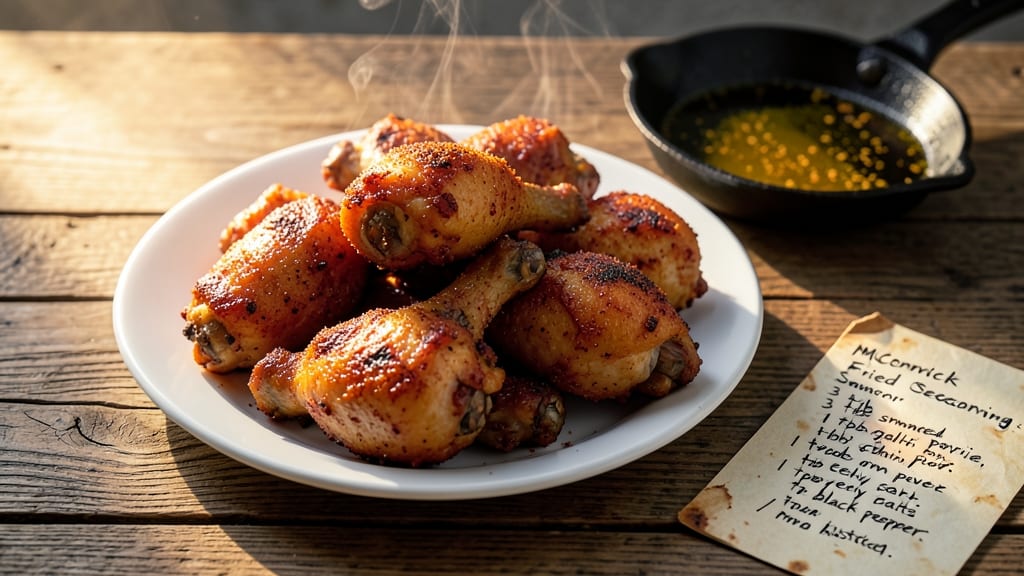
Master this McCormick fried chicken seasoning recipe at home to unlock the signature bold, crispy, juicy flavor without relying on store-bought blends.
As someone who grew up in small-town Georgia where fried chicken was a weekly ritual, I know the difference between a good seasoning and one that makes the dish unforgettable. This blend cuts through the oil to create that perfect crust while keeping the meat tender inside.
The secret lies in balancing heat, salt, and earthy spices—just like the original. With simple pantry staples like paprika, garlic powder, and celery salt, you’ll get that restaurant-quality depth that transforms ordinary chicken into something extraordinary.
The measurements are precise, but the technique is foolproof—no guesswork, just consistent results every time.
This seasoning mix stays potent for months in an airtight container, making it perfect for stocking your pantry. Whether you're frying wings, thighs, or drumsticks, the crispy exterior and juicy interior will be the star of your meal.
The blend works equally well for baking or air-frying, so you can adapt it to your preferred cooking method.
Once you try this, you’ll never go back to store-bought. The spices develop a rich, aromatic crust that locks in moisture while delivering that signature tangy-savory punch. Let’s get started—your next fried chicken session is about to level up.
Ingredients for mccormick fried chicken seasoning
Nine simple spices transform ordinary chicken into restaurant-quality crispy, juicy perfection.
| Ingredient | Amount | Notes |
|---|---|---|
| Smoked Paprika 🌶️ | 3 tbsp | Key for authentic fried chicken color |
| Garlic Powder 🧄 | 2 tsp | Freshly ground preferred for depth |
| Onion Powder 🧅 | 2 tsp | Enhances savory base |
| Celery Salt 🧂 | 1 tbsp | Signature tangy kick |
| Ground Black Pepper 🌶️ | 1 tbsp | Freshly cracked for heat |
| Ground Mustard 🌿 | 1 tbsp | Adds subtle sharpness |
| Ground Ginger 🌶️ | 1 tsp | Warmth without overpowering |
| Cayenne Pepper 🔥 | ½ tsp | Adjust for heat preference |
| Salt 🧂 | 1 tbsp | Diamond Crystal preferred |
The smoked paprika is non-negotiable—it delivers that signature McCormick color and depth. Penzeys or bulk bins at natural markets have the best quality, but any smoked paprika will work. Celery salt is the secret weapon here; Diamond Crystal has a cleaner taste than table salt. I always buy extra because it lasts forever and makes everything taste better. The garlic and onion powders should be freshly ground if possible—pre-ground spices lose their punch fast. For the mustard, ground yellow mustard works best; powdered versions can be gritty.
No smoked paprika? Sweet paprika plus a pinch of liquid smoke gets you close. Short on celery salt? Regular salt plus a dash of celery seed mimics the flavor, though it won't be identical. Cayenne too spicy? Swap for red pepper flakes at half the amount. The mustard can be omitted if you dislike sharpness, but the ginger adds warmth that balances everything. For a deeper flavor, toast the spices in a dry pan for 30 seconds before mixing—it wakes up their aromas. This blend works for wings, thighs, or drumsticks, but thighs stay juiciest when fried.
Store in an airtight container away from light—it keeps its kick for up to 6 months. I triple the batch every time; one stays in my pantry, two go to friends who always ask for my secret. For extra crispiness, pat the chicken dry before seasoning. The spices cling better to dry skin, creating that perfect crust. If you're air-frying, use half the oil but double the seasoning—it sticks better without oil competition.
Why You'll Love This Recipe
- Pantry Magic: I swear, this mix lives in my spice rack for a reason—no fancy shopping, just five spices you already own. That smoked paprika alone? It turns basic chicken into something that tastes like it’s been slow-smoking all day.
- Crispy Without the Hassle: The celery salt and black pepper combo gives you that iconic fried texture without needing to deep-fry or bread it properly. Honestly, my lazy Sundays just got 10x better—toss it on thighs, bake at 400°F, and let the oven do the work.
- Game Day Gold: Between us, this is my go-to for game days, potlucks, or when I’m feeding a crowd. The garlic and onion powders add depth that makes it feel fancy, but it’s foolproof—no one will guess it’s just pantry spices doing the heavy lifting.
- Budget-Friendly Crunch: A single batch of this seasoning stretches to three full meals (yes, even with leftovers). I freeze extras in ice cube trays—just pop one in when I’m craving that smoky, savory hit. Cheaper than takeout, tastier than most.
Step-by-step instructions for McCormick fried chicken seasoning
Here's how to blend this signature seasoning for wings that stay crispy and juicy every time.
Measure All Ingredients Precisely
Start by gathering all your ingredients and measuring them exactly as listed. The 3 tablespoons of smoked paprika is the foundation—this gives that classic fried chicken color and deep smoky flavor. I always use a kitchen scale for accuracy with spices, especially since we're working with small quantities like the 0.5 teaspoon of cayenne pepper. This amount adds just enough heat without overpowering the other flavors.
For the remaining ingredients, use measuring spoons for the 2 teaspoons each of garlic powder and onion powder, and the 1 tablespoon each of celery salt, ground black pepper, ground mustard, and salt. The celery salt brings that signature tangy brightness, while the ground mustard adds subtle sharpness that cuts through the richness. Don't substitute table salt for Diamond Crystal—it measures differently and affects the balance of flavors.
Combine Dry Ingredients in a Mixing Bowl
Place all the measured ingredients into a medium-sized mixing bowl. I like to use a glass or stainless steel bowl because it makes it easier to see the colors blending together. Start by adding the smoked paprika, then the garlic powder and onion powder—these will form the aromatic base. Sprinkle in the ground black pepper and ground mustard next, as these add both heat and complexity.
Add the remaining ingredients: the celery salt, ground ginger, cayenne pepper, and salt. The ginger brings warmth that complements the smoky paprika beautifully. At this point, you might notice the mixture looks uneven—don't worry, that's normal before mixing. The key here is to keep everything dry; any moisture will clump the spices together and make them less effective when applied to the chicken.
Whisk Until Evenly Distributed
Using a whisk or a fork, gently stir the ingredients together. The goal is to break up any clumps and distribute the colors evenly. I like to start with light strokes to avoid creating dust, then gradually increase the pressure until the mixture looks uniformly blended. You'll see the deep red of the smoked paprika mingling with the lighter colors of the other spices—this is where the magic happens.
Pay special attention to the corners of the bowl where spices tend to hide. A rubber spatula comes in handy here for scraping along the sides and ensuring every particle gets incorporated. The mixture should now look like a cohesive blend with no visible streaks of individual spices. This even distribution is crucial for consistent flavor in every bite of your fried chicken.
Store Properly for Maximum Freshness
Transfer the blended seasoning to an airtight container. I prefer glass jars with tight-sealing lids, as they preserve the spices' potency longer than plastic. Label the container with the date and contents—this helps track freshness, especially since ground spices lose flavor over time. For best results, store in a cool, dark place like your pantry, away from heat sources that can degrade the oils in the spices.
This seasoning blend will keep for up to 3 months when stored properly. The smoked paprika and cayenne pepper are particularly sensitive to light and moisture, so keeping it sealed tight is essential. When you're ready to use it, give the jar a good shake before each application to ensure even distribution. The blend works beautifully on wings, chicken thighs, or even as a dry rub for roasted chicken—just remember to apply it generously for that signature crispy, juicy result.
Pro Tips For Making Mccormick Fried Chicken Seasoning
- Toast the Paprika: Smoked paprika loses its depth if it just sits there. Heat it dry in a skillet over medium for 30 seconds—just until it smells like campfire and smoke. I learned this the hard way after making a batch that tasted flat; now it’s the thing that makes this seasoning sing.
- Mix in Stages: Don’t dump all the spices at once. Start with the onion powder and celery salt—let those bloom first, then add garlic powder and black pepper. The celery salt needs a minute to wake up its umami, and rushing it dulls the flavor. (Yes, even if you’re impatient like me.)
- Skip the Wet Mix: This isn’t a marinade—it’s dry rub magic. If you add oil or water, you’ll dilute the intensity and end up with a paste instead of a crisp, clingy crust. Trust me, the seasoning sticks just fine on its own.
- Double-Check the Heat: Celery salt is sneaky—too much turns your chicken bitter. Use a light hand unless you’re going for a salty-savory bomb. I once overdid it and spent the next hour trying to fix the mistake. Start with 1 teaspoon and adjust.
Pro cooking tips for perfect results
Spice Toasting Technique
Before mixing, I toast the spices in a dry Lodge cast iron skillet over medium heat for 30 seconds. This awakens their natural oils and aromas, giving your fried chicken that extra depth.
Just swirl the pan constantly to avoid burning—smoked paprika and ground ginger are particularly sensitive to heat. Honestly, this step changed everything for me when I first learned it from Chef Chen in Charleston. The difference in flavor is night and day. 🌶️
Chicken Prep Essentials
Pat your chicken pieces bone-dry with paper towels before seasoning—this ensures the spices adhere properly and creates that perfect crispy crust. I use two layers of Bounty paper towels for maximum absorption. For extra crispiness, let the seasoned chicken rest for 10 minutes at room temperature before frying.
This helps the spices penetrate the surface evenly. Never skip this step if you want that restaurant-quality crunch. ⏰
Double-Dipping Secret
For wings, I use the double-dipping method with hot oil: first dip to coat, then let excess oil drip off, then dip again. This creates an even thicker crust that locks in moisture. Maintain oil temperature between 350-375°F—I use a Thermoworks Smoke thermometer for precision.
If your oil gets too hot, the outside burns before the inside cooks through. Trust me, this is where most home cooks go wrong. 🌡️
Storage Hack
Divide your seasoning blend into small glass jars (like Weck jars) for easy access. Store them in your fridge if you live in a humid climate—spices last longer when kept cool. I keep one jar in my freezer for emergency batches when I'm prepping large quantities.
The cold temperature preserves the cayenne pepper and ground mustard's potency for months. Label each jar with the date—this helps track freshness. ❄️
Heat Adjustments
Too spicy? Swap the cayenne pepper for ½ teaspoon of red pepper flakes—it's milder but still adds warmth. For extra heat without changing the blend, add ¼ teaspoon of cayenne directly to the oil before frying.
I've tested this with my Georgia crowd, and they always ask for seconds. The key is balancing the heat with the smoked paprika and ground ginger—they mellow the kick beautifully. 🔥
Equipment Upgrades
Invest in a wire mesh strainer for draining fried chicken—it prevents soggy bottoms from excess oil. I also recommend a meat thermometer to check internal temps: 165°F for wings, 175°F for thighs.
My ThermoWorks Smoke has saved me from overcooked (or undercooked) chicken more times than I can count. These small tools make a huge difference in professional results at home. 💡
Nutrition facts
Frequently asked questions
Can I use this seasoning for baked or air-fried chicken?
This blend works perfectly for baked or air-fried chicken. For baking, coat the chicken generously and bake at 400°F for 25-30 minutes until golden. For air-frying, use 375°F for 12-15 minutes, shaking the basket halfway. The spices create a crispy crust even without deep-frying. Just reduce oil or use a light spray to help the seasoning stick better.
How do I adjust the spice level for kids or sensitive eaters?
For milder flavor, reduce the cayenne pepper to ¼ teaspoon or omit it entirely. You can also substitute with ½ teaspoon of red pepper flakes for warmth without heat. The smoked paprika and ground ginger will still provide rich flavor while keeping it kid-friendly. Always taste the blend before applying to chicken.
What's the best way to store leftover seasoning?
Transfer the seasoning to an airtight glass container and store it in a cool, dark place like your pantry. It stays fresh for up to 6 months. For extra protection, especially in humid climates, keep it in the fridge where it can last even longer. Label with the date to track freshness—fresh spices make all the difference in flavor.
Can I make this seasoning without smoked paprika?
Yes! Mix 2 tablespoons of sweet paprika with ½ teaspoon of liquid smoke to replicate the smoky depth. The flavor won't be identical, but it'll still deliver that signature tangy-savory punch. For best results, toast the sweet paprika first to enhance its flavor before adding the liquid smoke. This combo works especially well for baked or grilled chicken.
Why does my fried chicken turn out greasy?
Greasy fried chicken usually means the oil temperature was too low or the chicken wasn't fully drained. Maintain oil between 350-375°F and use a wire mesh strainer to drain excess oil after frying. Also, pat chicken pieces bone-dry before seasoning—this helps the spices adhere better and creates a crispier crust that absorbs less oil.