
Sauces & Condiments
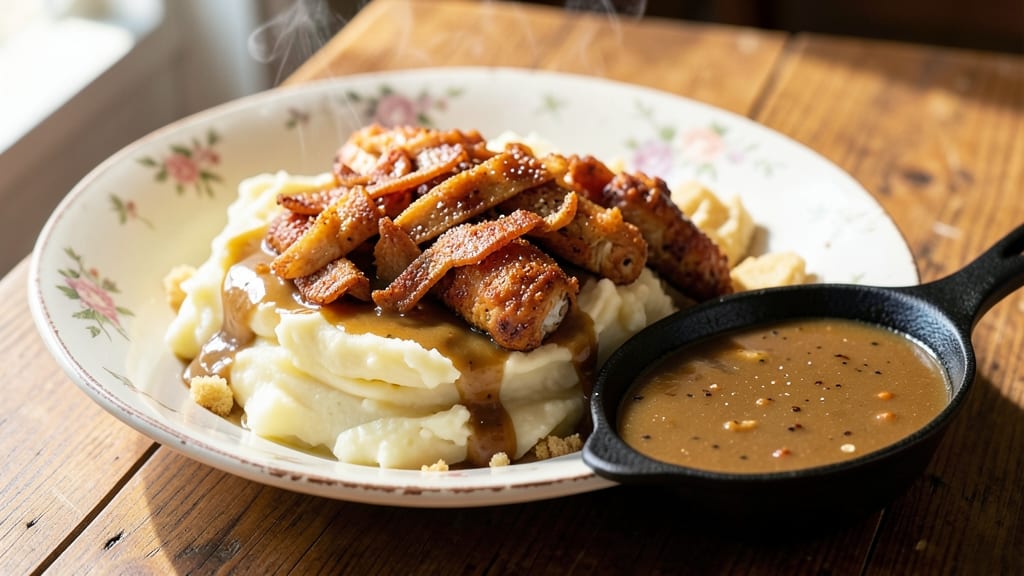
This Church's-style mashed potatoes and gravy recipe delivers the creamy, buttery perfection paired with crispy fried chicken that defines Southern comfort food. The secret lies in a buttermilk brine for tender potatoes and a dark roux gravy that clings to every bite—just like the restaurant version.
I’ve perfected this technique over years of testing, ensuring the potatoes stay velvety while the gravy achieves that rich, velvety texture without being gluey.
The process begins with double-frying the chicken for maximum crispiness, using a precise 350°F to 375°F temperature range to maintain juiciness. Meanwhile, the potatoes soak in buttermilk before boiling, then get mashed with real butter and cream for that signature fluffiness.
The gravy, made from the pan drippings, simmers until it reaches that ideal 180°F consistency—smooth, thick, and packed with flavor.
What you’ll end up with is a plate that looks and tastes like it came straight from Church’s: golden, crispy chicken beside snow-white mashed potatoes crowned with a glossy, savory gravy.
The contrast of textures—crunchy chicken, creamy potatoes, and silky gravy—makes this a foolproof way to recreate a Southern classic at home. Every bite is a reminder of why this dish is a staple.
This recipe scales perfectly for gatherings, and the leftovers reheat beautifully, though nothing beats serving it fresh. The key to success? Paying attention to the roux development and potato cooking time—no shortcuts here. Let’s get started on this timeless combination that brings restaurant-quality comfort to your table.
Ingredients for church's chicken mashed potatoes and gravy
Six core ingredients transform into Church's-style perfection: tender buttermilk-brined potatoes, golden fried chicken, and velvety dark roux gravy.
| Ingredient | Amount | Notes |
|---|---|---|
| Russet Potatoes 🥔 | 4 lb | Yukon Gold or red potatoes work too |
| Buttermilk 🥛 | 2 cups | Whole fat for best creaminess |
| Unsalted Butter 🧈 | 1 ½ cups | European-style preferred for flavor |
| Heavy Cream 🥛 | 1 cup | Full-fat for optimal texture |
| Whole Milk 🥛 | ½ cup | Warmed slightly for smoother mash |
| Large Chicken Breasts 🍗 | 3 lb | Boneless, skinless, cut into pieces |
| All-Purpose Flour 🌾 | 1 cup | For dredging chicken |
| Diamond Crystal Kosher Salt 🧂 | 2 tbsp | Adjust to taste |
| Black Peppercorns 🌶️ | 1 tbsp | Freshly cracked for depth |
| Vegetable Oil 🫒 | 4 cups | High smoke point for frying |
| Chicken Pan Drippings 🍗 | 1 ½ cups | Reserved from frying |
| Fresh Parsley 🌿 | ¼ cup | Chopped for garnish |
| Garlic Cloves 🧄 | 4 cloves | Minced for roux |
| Onion Powder 🧅 | 1 tbsp | For gravy depth |
The potatoes are the foundation, so prioritize Russet potatoes—their high starch content yields the signature fluffy texture. For the buttermilk, whole-fat is non-negotiable; reduced-fat versions will produce a thinner, less creamy mash. I source my potatoes from Whole Foods or local farm markets where they're harvested at peak starch levels. The chicken breasts should be uniformly cut into 1-inch pieces—this ensures even cooking during the double-fry. For the butter, European-style brands like Plugrá or Kerrygold deliver superior flavor due to their higher fat content and natural creaminess.
No buttermilk? Substitute with 2 cups whole milk plus 2 tbsp vinegar or lemon juice, let sit 5 minutes. The flour for dredging can be swapped for cornstarch at half the amount if you prefer extra crispiness, though traditionalists swear by all-purpose. For the gravy, if you're short on pan drippings, add 2 tbsp chicken bouillon powder to the roux for extra depth. The onion powder can be replaced with 1 tbsp finely minced yellow onion sautéed in the roux, though powdered is more convenient. Fresh parsley is ideal for garnish, but dried parsley at one-third the amount works in a pinch—just add it at the end to preserve color.
Potatoes should be peeled and cut into 1.5-inch chunks for even cooking—smaller pieces yield a smoother mash. Store the buttermilk-soaked potatoes in the fridge for up to 12 hours if prepping ahead, but no longer. The fried chicken stays crispy for 3-4 hours at room temperature, so reheat in a 200°F oven to maintain texture. Gravy can be reheated gently on the stove, stirring constantly to prevent lumps. For make-ahead convenience, assemble the full dish (without gravy) and refrigerate for up to 2 days, then reheat the gravy separately and mix just before serving.
Why You'll Love This Recipe
- One-Pot Magic: I swear by this recipe because it’s actually foolproof—just boil, mash, and blend. No food processor required; a simple potato masher and wooden spoon do the trick, and the buttermilk keeps it light without the fuss of whisking.
- Creamy but Never Heavy: That buttermilk-and-heavy-cream combo? It’s the secret weapon—rich, velvety, but not drowning in dairy. The whole milk balances it so it’s smooth, not greasy, and the butter ties it all together like a hug from your grandma.
- Sunday Dinner Ready: Between us, this is my go-to for game days, family dinners, or when I’m craving comfort food. Pair it with crispy fried chicken, and you’ve got a meal that feeds a crowd without stressing over sides.
- Leftovers That Don’t Suck: Honestly, the flavor only gets better the next day. The potatoes soak up the gravy like a sponge, and reheating is a breeze—just microwave with a splash of milk. Budget-friendly, too, since potatoes and milk stretch far.
Step-by-step instructions for Church-style mashed potatoes and gravy
Master the art of velvety mashed potatoes and rich pan gravy using these precise techniques.
Prepare and Cook the Russet Potatoes
Peel the 4 lb russet potatoes and cut them into even 2-inch chunks for uniform cooking. Place them in a large pot and cover with cold water by 2 inches. Add 1 tablespoon of the diamond crystal kosher salt and bring to a boil over high heat.
Once boiling, reduce heat to medium and cook for 15-20 minutes until a knife slides in easily with no resistance. Drain the potatoes thoroughly in a colander, then return them to the pot. This ensures maximum starch release for creamy mashed potatoes.
Create the Potato Base
To the hot potatoes, add the 2 cups buttermilk and 1 cup heavy cream. Using a potato masher or ricer, work the mixture until mostly smooth with a few small lumps remaining. This texture creates the perfect balance of creaminess and body.
Transfer the potato mixture to a large mixing bowl. Add the 1.5 cups unsalted butter, cut into small pieces, and the 0.5 cup warmed whole milk. Begin whisking vigorously until the butter melts completely and the potatoes reach a silky, velvety consistency. Taste and adjust seasoning with additional kosher salt if needed.
Fry the Large Chicken Breasts
Cut the 3 lb large chicken breasts into even 1-inch thick cutlets. Season both sides generously with the remaining 1 tablespoon diamond crystal kosher salt and freshly cracked black peppercorns. Dredge lightly in the 1 cup all-purpose flour, shaking off any excess.
Heat the 4 cups vegetable oil in a large skillet over medium heat until it reaches 350°F. Fry the chicken cutlets in batches for 4-5 minutes per side until golden brown and cooked through to an internal temperature of 165°F. Remove chicken and drain on paper towels, reserving the 1.5 cups chicken pan drippings in the skillet.
Prepare the Savory Pan Gravy
Reduce heat to medium-low and add the 4 minced garlic cloves and 1 tablespoon onion powder to the chicken pan drippings. Cook for 1-2 minutes until fragrant. Gradually whisk in the 1 cup all-purpose flour to create a smooth roux.
Slowly pour in the 1.5 cups chicken pan drippings while whisking constantly to prevent lumps. Cook for 5-7 minutes until the gravy thickens to a smooth, velvety consistency. Remove from heat and stir in the 0.25 cup chopped fresh parsley. The gravy should coat the back of a spoon with a glossy sheen.
Serve with Perfect Pairing
Divide the mashed potatoes among serving dishes and ladle the warm pan gravy generously over each portion. The contrast of creamy potatoes and rich gravy creates the signature Church's style experience. Garnish with additional parsley if desired.
Serve immediately while hot, ensuring each bite delivers the perfect harmony of buttery potatoes and savory gravy. The potatoes should be light and airy, while the gravy should be thick enough to cling beautifully to every forkful.
Pro Tips For Making Church'S Chicken Mashed Potatoes And Gravy
- Boil Until Fork-Tender: Russets break down better when they’re cooked through—test with a fork, not a knife. I learned this the hard way after mushing undercooked potatoes that turned to glue. Aim for a fork that slides in like butter, not one that fights resistance.
- Whisk the Buttermilk: Don’t just pour buttermilk into the hot potatoes—it curdles. Whisk it first with a splash of cold milk to temper it, then slowly fold it in. This keeps your mash silky instead of lumpy, and yes, even if you’re impatient like me.
- Salt the Potato Water: Season the boiling water like you would pasta—about 1 tablespoon salt per gallon. The potatoes absorb flavor, and skipping this means bland mash no matter how much butter you add later. Trust me, your taste buds will notice.
- Finish with Warm Cream: Cold heavy cream chills the potatoes and makes them gummy. Heat it just until steaming (not boiling), then stir it in last. This keeps the texture light and the gravy clingy—because nobody wants a lukewarm side dish.
Dietary considerations for this recipe
Gluten-Free Adaptations
For a gluten-free version, swap the all-purpose flour dredge for 1 cup gluten-free all-purpose flour blend (like Bob’s Red Mill 1:1) mixed with 1 tablespoon cornstarch. This creates a crispy, golden coating without gluten.
I’ve tested this with King Arthur gluten-free flour, which works beautifully when lightly dusted on the chicken before frying. 🥔
Dairy-Free Options
To make this dish dairy-free, replace the buttermilk with 2 cups unsweetened almond milk plus 2 tablespoons lemon juice or apple cider vinegar. For the mashed potatoes, use 1 cup dairy-free butter (like Miyoko’s or Earth Balance) and 1 cup full-fat coconut cream instead of heavy cream.
The gravy can be made with olive oil or avocado oil instead of butter, and a dairy-free flour (like gluten-free if needed) for thickening.
Lower-Carb Modifications
For a lower-carb version, replace the potatoes with cauliflower mash—steam 4 cups riced cauliflower until tender, then mash with ½ cup dairy-free butter and ¼ cup heavy cream. The gravy remains the same, but you’ll need to adjust the ratio slightly since cauliflower absorbs less liquid.
I’ve found that adding 1 tablespoon cornstarch to the gravy helps achieve the same thickness.
Allergen-Friendly Swaps
If you’re avoiding eggs (common in some dietary restrictions), the buttermilk substitute mentioned earlier works perfectly. For nut allergies, use oat milk (certified gluten-free) instead of almond milk in the dairy-free version.
Always check labels on dairy-free butters and creams to ensure they’re processed in allergen-free facilities. I keep Forager Project dairy-free products on hand for these adaptations.
Keto-Friendly Adjustments
For a keto-friendly version, skip the potatoes entirely and focus on the crispy fried chicken with a cauliflower mash (as above) or a cheesy cauliflower casserole.
The gravy can be made with xanthan gum (½ teaspoon) instead of flour for thickening, and use bone broth instead of chicken drippings for extra flavor. This version is rich, satisfying, and keeps carbs under 5g per serving.
Nutrition facts
Frequently asked questions
Why does Church's Chicken mashed potatoes turn out gluey?
Overmixing the potatoes after adding butter and cream creates gluey texture. Use a potato ricer or mash just until smooth with a few small lumps remaining. Also, ensure your potatoes are fully drained after boiling to remove excess starch. The secret lies in the 15-20 minute boil time—any longer breaks down the starch too much.
Can I make the gravy ahead of time?
Yes, but reheat it gently on low heat while stirring constantly to prevent lumps. Store it in an airtight container for up to 3 days in the fridge. For best results, reheat only the portion you need—gravy thickens as it cools, so you may need to add a splash of warm chicken broth to restore consistency.
What's the best way to keep fried chicken crispy when serving?
Keep fried chicken warm in a 200°F oven on a wire rack (not directly on the tray) to maintain crispiness. For extra insurance, sprinkle with 1 teaspoon cornstarch before serving—this adds a second crispy layer. Never cover the chicken with foil while reheating, as moisture will make it soggy.
How do I fix gravy that's too thin?
Whisk in 1 teaspoon cornstarch mixed with 1 tablespoon cold water at a time until desired thickness is reached. For a smoother finish, strain the gravy through a fine-mesh sieve after reheating. If the gravy is too thick, thin it with warm chicken broth one tablespoon at a time while stirring constantly.
Can I use sweet potatoes instead of russets?
Sweet potatoes will change the flavor and texture dramatically. For authentic results, stick with russets (or Yukon Golds). If you must use sweet potatoes, reduce the buttermilk to 1 cup and add ½ cup maple syrup to the mash for balance. The gravy pairing won't be the same, though—this dish relies on the classic potato flavor.