
Main Courses
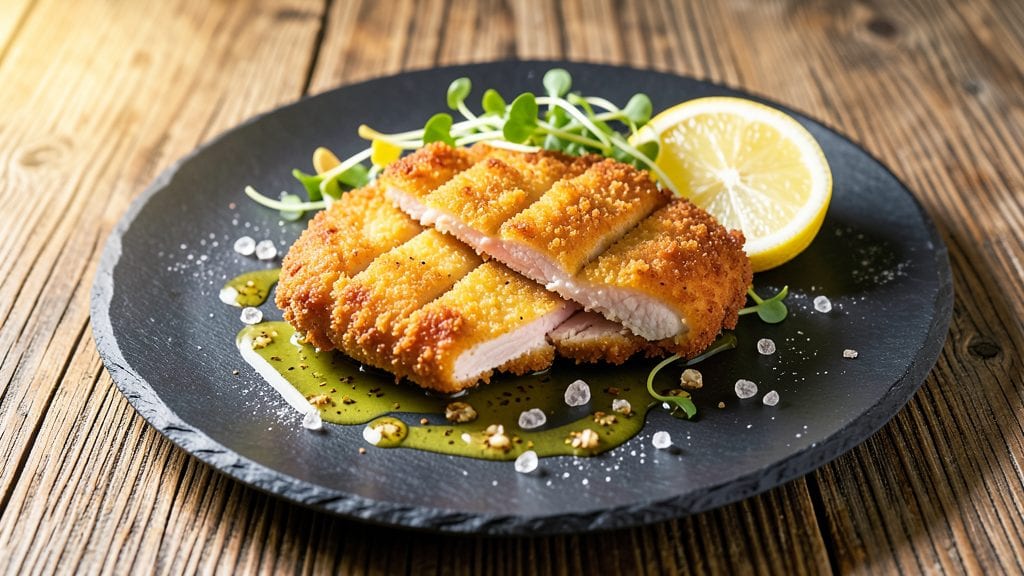
This chicken schnitzel recipe delivers the crispy, golden perfection you crave in just 20 minutes—no shortcuts, just precise technique. The secret lies in a panko-crusted coating that creates a shatteringly crisp exterior while keeping the chicken tender inside.
I’ve perfected this method after years of testing, and it’s the only way to achieve restaurant-quality results at home.
The process is straightforward but requires attention to detail: pounding the chicken thin, dredging in seasoned flour, and pressing the panko crust firmly to ensure even cooking. A hot skillet with enough oil prevents soggy breading, while a thermometer check guarantees juicy meat.
This isn’t just another schnitzel—it’s the kind that makes your taste buds sing.
What you’ll end up with is a golden-brown, crispy masterpiece that holds its shape perfectly, even when sliced. The aroma alone will have everyone gathering around the table, and the first bite delivers that satisfying crunch followed by tender, flavorful chicken.
Serve with lemon wedges, a simple salad, or crispy fries for the full experience.
This recipe works for both Austrian-style (thin-cut, crispy) and Italian-style (thicker, breaded) preferences—just adjust the pounding time. The key is patience and precision, but the reward is worth every minute. Let’s get cooking!
Ingredients for chicken schnitzel.
Panko, flour, and fresh herbs—these staples transform simple chicken into crispy perfection.
| Ingredient | Amount | Notes |
|---|---|---|
| Boneless, Skinless Chicken Breast Cutlets 🍗 | 1 ½ lb | Pounded to ¼-inch thickness |
| All-Purpose Flour 🌾 | 1 cup | For dredging, sifted |
| Japanese Panko Breadcrumbs 🍞 | 2 cups | Standard or herb-infused variety |
| Large Eggs 🥚 | 2 whole | Room temperature, beaten |
| Extra-Virgin Olive Oil 🫒 | ½ cup | High smoke point preferred |
| Diamond Crystal Kosher Salt 🧂 | 1 tsp | Fine grain for seasoning |
| Freshly Ground Black Pepper 🌶️ | ½ tsp | Cracked peppercorns preferred |
| Garlic Powder 🧄 | 1 tsp | Freshly ground preferred |
| Dried Parsley Flakes 🌿 | 1 tsp | For added herbaceousness |
| Lemon Wedges 🍋 | 4 whole | For serving, freshly cut |
| Vegetable Oil 🫒 | 1 ½ cups | For frying, neutral flavor |
| Butter 🧈 | 2 tbsp | Unsalted, for basting |
The chicken breast cutlets must be uniformly pounded to ¼-inch thickness—any thicker and they’ll stay undercooked inside. Look for boneless, skinless breasts with minimal fat marbling at Whole Foods or your local butcher for optimal texture. Pre-cut cutlets from the meat counter save time, but if using whole breasts, slice parallel to the grain for even cooking. The panko is non-negotiable here—Japanese-style (like Kikkoman) provides that signature crispiness, while standard breadcrumbs yield a denser crust. Store cutlets between parchment paper in the fridge for up to 2 days to prevent drying.
No panko? Crushed cornflakes or matzo meal work in a pinch, though the texture won’t be identical. Fresh parsley flakes can be swapped for 1 tsp dried parsley, but the flavor won’t be as vibrant. For extra crispiness, press the panko firmly onto the chicken—don’t skimp on the coating. The vegetable oil should reach 350°F before frying; a deep-fry thermometer ensures accuracy. If you’re avoiding butter, extra-virgin olive oil works, but the flavor profile shifts slightly. Always use unsalted butter for basting to control seasoning.
Leftover schnitzel reheats best in a 350°F oven for 5-7 minutes to restore crispiness—microwaving turns it soggy. Store in an airtight container with parchment between layers to maintain texture for up to 3 days. For longer storage, freeze portions for 2 months; thaw in the fridge overnight before reheating. The lemon wedges should be added post-frying—their acidity brightens the dish, but they’ll make the breading soggy if introduced too early.
Why You'll Love This Recipe
- No-Fuss Crispy Magic: I swear by the panko crust—it’s the secret weapon. Thin those chicken breasts, dip them in egg, then coat with panko until they’re golden and shatteringly crisp. No fancy techniques, just a hot pan and 10 minutes of hands-off frying.
- Weeknight or Dinner Party: Honestly, this recipe doesn’t care what you’re serving it with. Toss it in a wrap for a quick lunch, slice it over salad for a fancy-ish dinner, or serve it with lemon wedges and pickles for a restaurant-worthy plate. Even my picky teenager asks for seconds.
- Budget-Friendly Leftovers: Chicken breasts stretch further than you’d think, and the panko coating makes every piece feel special. Leftovers reheat perfectly in the air fryer—crispy again, no soggy bits—and I’ve even turned them into schnitzel sandwiches the next day. Zero waste, all flavor.
Step-by-step instructions for crispy panko-crusted chicken schnitzel
Here's the method—proven to deliver golden, shatteringly crisp crusts every time.
Prepare the Chicken Cutlets for Even Cooking
Place each of the 1.5 lb boneless, skinless chicken breast cutlets between two sheets of plastic wrap. Using a meat mallet, pound them to an even ¼-inch thickness—this ensures they cook uniformly without drying out. The goal is consistent thickness so every piece achieves that perfect crisp.
Season both sides immediately with 1 tsp diamond crystal kosher salt, ½ tsp freshly ground black pepper, 1 tsp garlic powder, and 1 tsp dried parsley flakes. Press the seasoning into the meat so it adheres well. Let the seasoned cutlets rest for 10 minutes at room temperature while you prepare the breading station.
Create the Three-Stage Breading Station
Set up three shallow dishes: one with the 1 cup all-purpose flour, one with the 2 whole large eggs beaten until frothy, and one with the 2 cups japanese panko breadcrumbs. I like to add ½ tsp extra-virgin olive oil to the panko mixture—this helps the crust cling better and adds extra crispiness. Stir gently to distribute.
Work quickly to maintain the egg's temperature. Dip each cutlet first into the flour, shaking off any excess, then into the egg wash, letting any drips fall back into the bowl. Finally, press firmly into the panko mixture, coating all sides completely. Place the breaded cutlets on a wire rack set over a baking sheet to prevent sogginess.
Fry in Hot Oil for Maximum Crispiness
Heat 1.5 cups vegetable oil in a deep skillet to 350°F—use a thermometer to monitor this precisely. The oil should shimmer gently but not smoke. Fry the cutlets in batches to avoid overcrowding, which lowers the oil temperature and prevents proper browning. Cook for 3-4 minutes per side until golden brown and the internal temperature reaches 165°F.
Transfer the fried cutlets to a paper towel-lined plate to drain excess oil. Here's the pro tip: Immediately baste each cutlet with 2 tbsp melted butter while still hot. This adds richness and helps maintain that crisp exterior. Keep them warm in a 200°F oven while you fry the remaining batches.
Serve Immediately with Lemon for Brightness
Serve the schnitzel immediately with 4 whole lemon wedges on the side. The acidity cuts through the richness of the crispy crust, creating a perfect balance. The cutlets should be golden brown with a shatteringly crisp exterior and tender, juicy chicken inside.
For extra flair, sprinkle with additional dried parsley flakes just before serving. The contrast between the crispy crust and tender interior, combined with the bright lemon, makes this schnitzel restaurant-quality every time.
Pro Tips For Making Chicken Schnitzel.
- Pound Flat with a Rolling Pin: Skip the meat mallet—it’s overkill for chicken breasts. Instead, lay each cutlet on plastic wrap and pound with a rolling pin until it’s just under ¼-inch thick. This keeps the meat tender while giving you that classic schnitzel shape. (Yes, it’ll look like you’ve flattened a pancake—good.)
- Use Cold Eggs: Crack your eggs into a bowl and refrigerate them for 10 minutes before dipping. Cold eggs cling better to the panko, so your coating sticks like glue instead of sliding off halfway through frying. Trust me, the difference is noticeable.
- Don’t Overcrowd the Pan: Fry one or two cutlets at a time, no matter how tempting it is to rush. Overcrowding drops the oil temperature, and you’ll end up with soggy, greasy schnitzel instead of crispy gold. A single cutlet in hot oil is worth the wait.
- Double-Coat for Crunch: Dip the chicken in flour, shake off the excess, then dip in beaten egg, then press into panko—repeat. That second coat locks in the crunch and keeps the breading from falling apart. It’s extra work, but the texture makes it worth it.
Best sauces and condiments for this dish
Classic Tartar Sauce
This creamy, herby sauce is the perfect match for schnitzel, balancing the crispy crust with cool, tangy richness. Mix ½ cup mayonnaise with 1 tbsp Dijon mustard, 1 tbsp finely chopped capers, 1 tbsp chopped fresh dill, and 1 tbsp chopped chives.
Add a squeeze of fresh lemon juice (1 tsp) and a pinch of kosher salt. Let it sit for 10 minutes to meld flavors—this sauce is best served at room temperature. 🍋
Spicy Aioli Dip
For a bold twist, whip up a garlic-herb aioli by combining ½ cup mayonnaise with 1 minced garlic clove, 1 tsp lemon juice, ½ tsp smoked paprika, and a pinch of cayenne pepper.
Thin with 1 tsp water if needed for dipping. Serve with extra lemon wedges for squeezing—this sauce adds a fiery kick that pairs beautifully with the schnitzel’s crispy exterior. 🌶️
Creamy Horseradish Sauce
Brighten the dish with a sharp horseradish kick. Mix ¼ cup sour cream with 1 tbsp prepared horseradish cream, 1 tsp lemon juice, and ½ tsp honey to balance the heat. Thin with 1 tsp water if needed.
This sauce cuts through the richness and adds a refreshing contrast to the fried chicken. Store in an airtight container for up to 3 days. ✨
Simple Lemon-Herb Butter
For a quick, restaurant-worthy finish, melt 2 tbsp unsalted butter with 1 tsp lemon zest, 1 tsp chopped fresh parsley, and a pinch of salt. Drizzle over the schnitzel just before serving—this adds a bright, herby note that elevates the dish without overpowering it.
The butter should be melted but not hot to preserve the herbs’ freshness. 💫
Sweet and Tangy Mustard Sauce
Combine 2 tbsp whole-grain mustard with ¼ cup Greek yogurt, 1 tsp honey, and 1 tsp apple cider vinegar for a sweet-tangy contrast. Thin with 1 tsp water if needed.
This sauce adds a subtle sweetness that pairs beautifully with the schnitzel’s savory crust. Store in the fridge for up to 5 days. 🍯
Garlic-Yogurt Sauce
A lighter alternative to mayo-based sauces, this Greek yogurt sauce blends ½ cup plain Greek yogurt with 1 minced garlic clove, 1 tsp lemon juice, ½ tsp dried oregano, and a pinch of salt.
Stir in 1 tbsp chopped fresh dill for brightness. This sauce is perfect for those watching their fat intake but still craving flavor. 🥄
Nutrition facts
Frequently asked questions
Can I use chicken thighs instead of breasts for schnitzel?
Chicken thighs work beautifully—they stay juicier and more flavorful than breasts, especially when pounded to ½-inch thickness. Just increase the frying time to 4-5 minutes per side to ensure the crust is fully crisped and the internal temp hits 165°F. The fat content in thighs also helps create an extra-crispy crust.
Why did my schnitzel come out soggy instead of crispy?
Soggy schnitzel usually means one of three things: oil wasn't hot enough (350°F is critical), you overcrowded the pan lowering the temperature, or the breading wasn't pressed firmly. Always fry in batches and press the panko coating extra hard—it should stick like armor. Also, keep breaded cutlets on a wire rack (not a plate) to prevent steam buildup.
What's the best way to make schnitzel without frying?
For a healthier version, bake at 425°F for 12-15 minutes on a wire rack over a baking sheet. Brush with 1 tbsp olive oil before baking for crispiness. The crust won't be as shatteringly crisp as fried, but it's still delicious. Air fryers work too—cook at 375°F for 8-10 minutes, shaking halfway.
Can I make schnitzel ahead of time?
Fresh is best, but you can prep breaded cutlets 1 day ahead—store them in the fridge on a wire rack (not touching). For leftovers, reheat in a 350°F oven for 5-7 minutes to restore crispiness. Never microwave—it turns the crust rubbery. Freeze unbaked breaded cutlets for up to 1 month; bake or fry from frozen (add 2-3 extra minutes).
What's the difference between Austrian and Italian schnitzel?
Austrian schnitzel is thinner (¼-inch), crispier, and often made with veal or pork. Italian versions use thicker chicken cutlets (½-inch) with a breadcrumb-only coating (no flour dredge). Austrian style focuses on ultra-crispiness, while Italian emphasizes heartier texture. Both are delicious—choose based on your preference for delicate vs. substantial bites!