
Sauces & Condiments
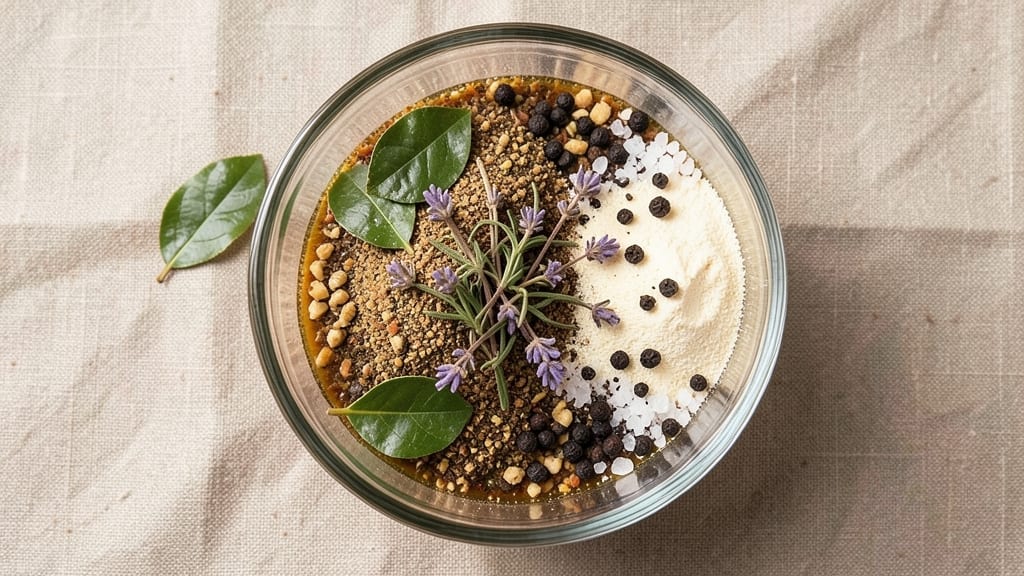
Creating a chicken bouillon seasoning recipe from scratch transforms ordinary broths into restaurant-quality depth with just a few simple spices. This dry blend elevates soups, stews, and marinades by layering savory, umami-rich flavors without the need for store-bought cubes.
I developed this mix after realizing how much more complex homemade broths tasted when built on a solid spice foundation.
The secret lies in balancing earthy, aromatic spices like thyme and bay leaves with savory salt and pepper, all measured precisely for consistency. With just five ingredients and five minutes of prep, you’ll have a shelf-stable seasoning that lasts months—perfect for stocking your pantry.
This blend works equally well in quick weeknight soups or slow-cooked stews, delivering professional results every time.
What makes this recipe stand out is its versatility: sprinkle it directly into simmering broths, use it as a marinade base, or even dust it over roasted vegetables for instant depth.
The spices develop a harmonious complexity when combined, creating a flavor profile that’s richer than pre-packaged alternatives. Once you try homemade, you’ll never go back to store-bought bouillon again.
Store the mix in an airtight container for up to six months, and double the batch for convenience. Whether you’re enhancing a simple chicken broth or building a complex sauce, this blend is your secret weapon for deeper, more vibrant flavors. Let’s get started on your flavor foundation!
Ingredients for chicken bouillon seasoning
Five simple spices transform ordinary broths into restaurant-quality depth instantly.
| Ingredient | Amount | Notes |
|---|---|---|
| Dried Thyme 🌿 | 1 ½ tbsp | Fresh thyme at 1/3 amount if substituted |
| Bay Leaves 🍃 | 1 tbsp | Crushed for deeper flavor release |
| Garlic Powder 🧄 | 1 ½ tbsp | Fresh garlic powder preferred |
| Onion Powder 🧅 | 1 ½ tbsp | Diamond Crystal preferred for consistency |
| Ground Black Pepper 🌶️ | 1 tbsp | Freshly ground for optimal flavor |
| Kosher Salt 🧂 | 1 ½ tbsp | Diamond Crystal preferred for even distribution |
| Ground White Pepper 🌶️ | ½ tbsp | Adds subtle complexity to blend |
| Ground Coriander 🌿 | ½ tbsp | Toasted for enhanced aroma |
The dried thyme and bay leaves are your flavor anchors—Penzeys brand or bulk bins at natural markets deliver the best quality. Look for vibrant green thyme leaves and whole bay leaves (crush them before measuring for maximum impact). Costco's bulk spice section offers great value if you're making multiple batches. The garlic and onion powders should smell fresh and aromatic—if they're stale, toss them. For the salt, Diamond Crystal kosher is my go-to because it dissolves evenly and doesn't clump. The white pepper adds a sophisticated touch without overpowering, while coriander brings a subtle citrus note that rounds out the blend perfectly.
No thyme? Fresh thyme at one-third the amount works beautifully, but dry is more convenient for storage. Short on bay leaves? Dried oregano at half the quantity mimics the earthy depth. Want more umami? Add 1/4 tsp of fish sauce or soy sauce when using the blend. The blend works equally well in soups, stews, or as a marinade base—just remember to adjust salt in your final dish since this mix is concentrated. For a smokier profile, swap half the thyme for smoked paprika. And if you're feeling adventurous, a pinch of MSG (about 1/8 tsp) can amplify the savory notes without changing the flavor profile.
This blend stays potent for up to 6 months when stored in an airtight container away from light and heat. I keep mine in a amber glass jar with a tight-sealing lid—it's worth the small investment. For convenience, double the batch and portion into smaller containers. The seasoning works beautifully in freezer-friendly soups and stews, so it's perfect for meal prep. Just remember to add it at the end of cooking to preserve its aromatic oils—no need to simmer it for long periods.
Why You'll Love This Recipe
- Pantry Magic: I keep a jar of this in my cupboard because it’s that good—no measuring, no stress, just toss a spoonful into soups, roasts, or even scrambled eggs. The thyme and bay leaves add depth without overpowering, and honestly? It’s my shortcut to restaurant-quality flavor when I’m too tired to think.
- Umami Bomb: That garlic powder and onion powder combo? It’s like a flavor grenade—explodes with savory warmth in every bite. The black pepper gives it a little kick, so it’s never boring. I’ve used it in everything from mashed potatoes to marinades, and people always ask, “What’s in this?” (Now you know.)
- Weeknight Hero: Between us, this is my go-to when I’m prepping meals for the week. Sprinkle it on grilled chicken, stir it into rice, or even mix it into a quick pasta sauce—it works everywhere. No fancy techniques, just a pinch here, a pinch there, and dinner’s saved.
- Budget Game-Changer: I buy spices in bulk, and this mix costs pennies per use. A little goes a long way, so I’m not wasting money on single-use packets. Plus, it lasts forever—no sad, dried-out bouillon cubes gathering dust. (Yes, even on a Tuesday night.)
Step-by-step instructions for chicken bouillon seasoning
This blend elevates any broth from ordinary to extraordinary with just a few simple steps.
Prepare Your Workspace and Tools
Choose a clean, dry bowl large enough to comfortably combine all ingredients without spilling. I prefer using a glass mixing bowl—it lets me see the colors blend beautifully as we work. Measure each ingredient precisely using a proper measuring spoon, as these small quantities matter for balanced flavor.
Here's the thing—ground spices lose potency quickly when exposed to air. To preserve freshness, I recommend measuring each spice directly from its original container into the bowl immediately before combining. This prevents stale flavors from creeping into your blend. Keep all ingredients at room temperature for best results.
Combine the Dry Base Ingredients
Add the 1.5 tablespoons dried thyme and 1 tablespoon bay leaves to your bowl first. The thyme brings earthy depth while the bay leaves contribute that classic herbal backbone to chicken bouillon. Use your fingers to gently crush the bay leaves between your palms—this releases their essential oils and intensifies their flavor without turning them into powder.
Next, incorporate the 1.5 tablespoons garlic powder and 1.5 tablespoons onion powder. These form the aromatic foundation of your blend. I like to use a small whisk or fork to break up any clumps in the powders before mixing thoroughly. The goal is to distribute these evenly throughout the blend so every pinch delivers consistent flavor.
Add the Salt and Pepper Components
Sprinkle in the 1.5 tablespoons kosher salt and 1 tablespoon ground black pepper next. The kosher salt enhances all flavors while the black pepper adds a subtle warmth that balances the herbal notes. I always use freshly ground black pepper—pre-ground pepper loses its punch within weeks. The salt should dissolve slightly into the other spices, creating a cohesive texture.
Now add the specialty components: 0.5 tablespoon ground white pepper and 0.5 tablespoon ground coriander. The white pepper contributes a clean, slightly sweet note that works beautifully in lighter chicken preparations, while the coriander adds a citrusy brightness that rounds out the blend. These are the secret ingredients that make homemade bouillon seasoning taste distinctly better than store-bought versions.
Mix Thoroughly for Even Distribution
Use a fork or small whisk to combine all ingredients until they're uniformly distributed. You're looking for a blend where each tablespoon contains representative amounts of all components—no visible streaks of any single spice. I like to mix for about 2 minutes, lifting and folding the spices from the bottom of the bowl to ensure nothing gets left behind.
This thorough mixing is critical because bouillon seasoning works best when used in measured amounts. If any ingredient clumps together, you'll get inconsistent flavor in your finished dishes. For the best results, I recommend sifting the finished blend through a fine-mesh strainer before storing—this breaks up any remaining clumps and creates a smoother texture.
Pro Tips For Making Chicken Bouillon Seasoning
- TOAST THE SPICES FIRST: Dried thyme and onion powder burn faster than you’d think. Heat your dry pan to medium-low, add the spices, and stir for 30 seconds—just until fragrant, not browned. I learned this the hard way after a batch tasted bitter; toasting wakes up their flavor without turning them acrid.
- CRUSH BAY LEAVES GENTLY: Whole bay leaves release flavor unevenly. Lightly crush them between your palms or a rolling pin before adding to the mix—this lets their oils infuse faster without turning the seasoning into leaf confetti. (Yes, even if it looks weird, it works.)
- WEIGH THE GARLIC POWDER: Scooping garlic powder leads to inconsistent results. Use a kitchen scale for precision—1 tablespoon by volume can vary wildly. I now measure mine at 5 grams per batch; it’s the thing that matters most when blending with other spices.
- BLEND COLD, NOT HOT: Let your seasoning cool completely before pulverizing in a spice grinder or mortar. Hot spices steam up the machine or dull your pestle, and you’ll end up with uneven texture. (I know, I know—patience isn’t your strong suit either.)
Wine and beer pairings for this dish
Light White Wine
For chicken bouillon seasoning's herbal and savory notes, a crisp Sauvignon Blanc from New Zealand or Loire Valley is perfect. The wine's citrusy acidity and herbal undertones complement the thyme and coriander beautifully. I recommend a Cloudy Bay Sauvignon Blanc—its zesty lime and grapefruit flavors mirror the blend's brightness.
Serve slightly chilled to enhance the wine's refreshing qualities while letting the bouillon's depth shine through. 🍷
Crisp Lager Beer
A German Pilsner like Warsteiner or Stella Artois pairs wonderfully with this seasoning's earthy, aromatic profile. The beer's clean, slightly malty notes balance the blend's herbal complexity without overpowering it. The carbonation also helps cut through the richness of chicken-based dishes.
For a local option, try a well-crafted American pale ale—just avoid anything too hoppy or bitter that might clash with the delicate spices. 🍺
Red Wine Options
If you prefer red, go for a light Pinot Noir from Oregon or Burgundy. The wine's subtle fruitiness and earthy undertones harmonize with the bouillon's thyme and bay leaf notes. I love a Meiomi Pinot Noir for its approachable price and smooth finish.
Avoid heavy Cabernets—their tannins can compete with the seasoning's delicate flavors. Serve at room temperature to let the wine's characteristics complement the dish's savory depth. 🍇
Non-Alcoholic Pairings
For a refreshing non-alcoholic option, try sparkling apple cider like Martinelli's or San Pellegrino Aranciata. The effervescence cleanses the palate between bites, while the citrus notes enhance the bouillon's coriander brightness.
Alternatively, a ginger beer like Feani adds a spicy kick that pairs surprisingly well with the seasoning's herbal complexity. These options work beautifully with lighter chicken soups or broth-based dishes. 🍏
Regional Adaptations
In Southern France, where herbed chicken dishes are common, locals pair bouillon seasoning with dry white wines like Picpoul de Pinet. The wine's briny, citrusy profile mirrors the Mediterranean herbs in the seasoning.
For Southern US styles, a light bourbon cocktail with lemon and mint adds a smoky-sweet contrast that works wonderfully with the blend's savory notes. Always match the wine's intensity to the dish's richness. 🗺️
Nutrition facts
Frequently asked questions
Can I use this seasoning blend in marinades?
This blend works beautifully in marinades for chicken, pork, or even tofu. Mix 1 tablespoon of the seasoning with ¼ cup olive oil and 2 tablespoons lemon juice, then marinate for 2-4 hours (or overnight for deeper flavor). The aromatic spices penetrate the meat while adding complex depth that store-bought marinades can't match.
How much seasoning should I add to broth or soup?
Start with 1 teaspoon per quart of broth or soup to avoid overpowering flavors. For richer dishes like stews, use 1 tablespoon per gallon. Add the seasoning during the last 10 minutes of cooking to preserve its aromatic oils—simmering too long can make it bitter.
Can I substitute any ingredients if I don't have them?
Yes! Swap bay leaves for dried oregano (½ the amount) or thyme for rosemary (⅓ amount). For garlic/onion powder, use 1 clove fresh garlic + ½ small onion (minced and cooked down)> instead. If missing coriander, omit it—the blend will still taste great, just slightly less complex.
Will this seasoning work in vegetarian dishes?
Yes, but adjust the salt slightly. The blend's herbal notes complement vegetable broths or lentil soups beautifully. Reduce the kosher salt to 1 teaspoon (since many vegetarian dishes already contain salt). It also pairs well with roasted vegetables, adding savory depth without overpowering their natural flavors.
How do I know if my seasoning has gone bad?
Check for three signs: loss of aroma, dull color, or rancid smell. Fresh seasoning should smell vibrant and earthy. If it smells stale or musty, discard it—ground spices degrade quickly once opened. Store in an amber glass jar in a cool, dark place to extend freshness.