
Main Courses
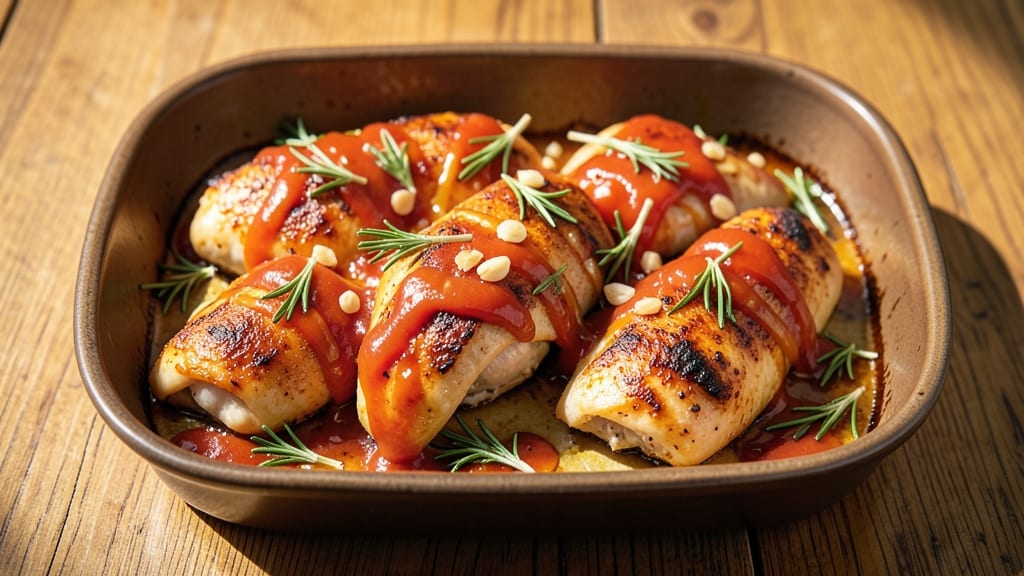
This baked chicken with mustard and ketchup recipe delivers a tangy, caramelized crust that transforms ordinary chicken into something restaurant-worthy. The secret lies in balancing sharp mustard with sweet ketchup, creating a glaze that both tenderizes the meat and develops into a sticky, flavorful bark.
I perfected this method after years of testing—no complicated techniques, just a simple glaze that packs bold flavor with minimal effort.
The beauty of this recipe is its foolproof simplicity: just a few pantry staples, 30 minutes of prep, and 45 minutes in the oven at 375°F. The mustard-ketchup glaze doesn’t just coat the chicken—it penetrates, keeping the meat juicy while forming that irresistible crust.
This is the kind of dish that shines on weeknights but feels special enough for company, with a balance of sweet, tangy, and savory that everyone loves.
What you’ll end up with is golden-brown, crisp-edged chicken that’s moist inside and perfectly caramelized outside, ready to be sliced or shredded. The glaze clings beautifully, making each bite sticky and flavorful without being overly sweet.
Serve with roasted potatoes, crusty bread, or a simple green salad to soak up every last drop of that tangy sauce.
This recipe scales perfectly—whether you’re feeding a family of four or hosting a crowd. The glaze keeps well in the fridge, so you can prep ahead and bake when ready.
The result? Juicy, flavorful chicken that tastes like it came from a diner, but with the simplicity of a home-cooked meal. Let’s get baking!
Ingredients for baked chicken with mustard and ketchup
Transform ordinary chicken into restaurant-worthy bites with these precise ingredients.
| Ingredient | Amount | Notes |
|---|---|---|
| Boneless, Skinless Chicken Thighs 🍗 | 1 ½ lb | Medium-large size, trimmed of excess fat |
| Yellow Mustard 🥫 | ½ cup | Dijon or whole-grain preferred |
| Ketchup 🍅 | ½ cup | Heinz or similar brands for consistency |
| Olive Oil 🫒 | 2 tbsp | Extra-virgin for richness in glaze |
| Honey 🍯 | 2 tbsp | Light or clover variety preferred |
| Garlic Cloves 🧄 | 4 cloves | Minced for even distribution |
| Fresh Rosemary 🌿 | ½ tsp | Chopped, or 0.25 tsp dried |
| Salt 🧂 | 1 ½ tsp | Diamond Crystal kosher preferred |
| Black Pepper 🌶️ | ½ tsp | Freshly ground for optimal flavor |
| Russet Potatoes 🥔 | 2 medium | For serving, cut into wedges |
| Crusty Bread 🍞 | 1 loaf | Baguette or sourdough for dipping |
The chicken thighs are the foundation—bone-in, skin-on for maximum flavor, but boneless works in a pinch. Trader Joe's often carries pre-trimmed thighs if you're short on time. For the mustard-ketchup glaze, Dijon mustard adds depth while ketchup provides that sweet, tangy balance. The honey isn't just for sweetness; it helps the glaze caramelize beautifully. I always grab Heinz ketchup for consistency, but any good-quality brand works. Fresh rosemary elevates the dish—Whole Foods sells beautiful bundles, or grab dried if fresh isn't available.
No Dijon mustard? Yellow mustard plus 1 tsp apple cider vinegar mimics the tang. Short on honey? Maple syrup at 1:1 ratio works beautifully. The garlic can be pre-minced from a jar (though fresh is ideal), and if you're missing rosemary, thyme or oregano at half the amount will still work. For the potatoes, Yukon Golds are ideal—they hold their shape better when roasted. If you're serving a crowd, double the potatoes and bread; they disappear fast with that sticky glaze.
The glaze keeps well in the fridge for 5 days—make extra and use it on burgers or grilled chicken later. Store the chicken in an airtight container with the glaze coating it evenly. The potatoes and bread can be prepped ahead and reheated separately. For a make-ahead meal, assemble everything the night before and bake straight from the fridge—just add 10-15 minutes to the cooking time. The crust develops best when baked at 375°F, so don't rush the oven temperature.
Why You'll Love This Recipe
- Five-Ingredient Magic: I swear by this combo—just chicken, mustard, ketchup, honey, and olive oil. That’s it. No fancy ingredients, no stress. The mustard adds tang, the ketchup gives it depth, and the honey? It caramelizes into a sticky, irresistible glaze that takes zero effort.
- Weeknight Hero: Honestly, this is my "I don’t want to cook but still want dinner" dish. Toss everything on a sheet pan, pop it in the oven, and walk away. Twenty minutes later, you’ve got dinner—no chopping, no flipping, no mess. (Yes, even on a Tuesday night.)
- Leftovers That Don’t Suck: Between us, most baked chicken turns into dry, sad leftovers. Not this. The glaze keeps it moist, and the thighs stay juicy even reheated. I make a double batch on Sundays because it’s the only chicken that doesn’t disappoint in a lunchbox or over rice the next day.
- Sweet-Savory Flex: Here’s what sold me—this works for everything. Serve it with mashed potatoes for comfort, wrap it in a bun for a quick sandwich, or toss it over greens for a no-fuss salad. The mustard-ketchup glaze is forgiving enough to play well with almost any side, so it’s my go-to for lazy dinners or feeding a crowd.
Step-by-step instructions for baked chicken with mustard and ketchup
This method delivers perfectly caramelized chicken with a sticky, tangy glaze every time.
Prepare the Chicken and Glaze Mixture
Preheat your oven to 375°F and position a rack in the center position. In a medium bowl, combine the 0.5 cup yellow mustard, 0.5 cup ketchup, 2 tablespoons olive oil, 2 tablespoons honey, 4 minced garlic cloves, 0.5 teaspoon chopped fresh rosemary, 1.5 teaspoons salt, and 0.5 teaspoon black pepper. Whisk vigorously until fully emulsified—the mixture should be smooth and glossy, with no visible streaks of honey or mustard.
Pat the 1.5 lb boneless, skinless chicken thighs completely dry with paper towels, pressing firmly to remove all moisture. This step is critical for achieving that perfect caramelized crust. Place the chicken in a single layer in a shallow baking dish just large enough to hold them snugly.
Coat and Rest the Chicken
Using a silicone spatula, carefully coat each chicken thigh with the glaze mixture, ensuring even distribution on all sides. Press the thighs down gently to help the glaze adhere—this prevents pooling and ensures maximum contact with the meat. Let the coated chicken rest at room temperature for 15-20 minutes while the oven preheats fully.
This resting period allows the glaze to penetrate slightly and the chicken to come to room temperature, which guarantees more even cooking. The glaze should look glossy and well-adhered when you return to it—if it appears dry, add a teaspoon of water and stir to restore its consistency.
Bake Until Glaze Caramelizes
Transfer the baking dish to the preheated oven and bake for 35-40 minutes, rotating the dish halfway through the cooking time to ensure even browning. The chicken is done when the internal temperature reaches 165°F and the glaze has thickened into a sticky, caramelized crust that pulls away slightly from the edges.
You'll notice the glaze darkening and forming bubbles—this is your signal that the natural sugars are caramelizing. If the glaze appears too thin after 30 minutes, tent the dish with foil and continue baking to prevent over-browning while the chicken finishes cooking.
Prepare and Serve with Sides
While the chicken rests for 5 minutes (covered loosely with foil), cut the 2 medium russet potatoes into wedges and toss them with 1 tablespoon olive oil, 0.5 teaspoon salt, and 0.25 teaspoon black pepper. Spread them on a separate baking sheet and roast at 425°F for 25-30 minutes until golden and crispy, flipping halfway.
Slice the chicken against the grain into ½-inch thick portions and serve immediately with the potato wedges and 1 loaf crusty bread for dipping in the remaining glaze. The chicken should be juicy with a crisp exterior, and the glaze should be thick enough to cling to each bite without being overly sweet.
Pro Tips For Making Baked Chicken With Mustard And Ketchup
- Preheat Pan, Not Just Oven: Your oven can hit 375°F, but the baking dish? Not so much. I learned this the hard way—cold pans steal heat, and your chicken ends up steaming instead of browning. Slap that dish in the oven for 10 minutes before adding the thighs, even if it feels like overkill.
- Whisk the Sauce Right: That mustard-ketchup mix isn’t just glop—it’s the glue holding flavor together. Use a fork to break up any lumps in the mustard first, then whisk in the ketchup and honey until smooth. I skip this step half the time, and the sauce ends up clumpy on top of the chicken.
- Don’t Overmix the Glaze: You want the sauce to cling, not drip off the tray. Brush only half the mustard-ketchup mix onto the chicken first, then bake it uncovered for 15 minutes to set a sticky base. The rest goes on later—this keeps it glossy, not greasy.
- Use a Meat Thermometer: Chicken thighs are forgiving, but 165°F is non-negotiable. I used to eyeball it and pull them at 160°F, only to have them turn rubbery. Hit 165°F in the thickest part, then tent with foil for 5 minutes—this guarantees juicy results without drying them out.
Perfect pairings for baked chicken with mustard and ketchup
Classic Side Pairings
Roasted russet potatoes are my go-to side—their crispy edges and fluffy centers soak up the glaze beautifully. Toss 2 medium potatoes cut into wedges with 1 tbsp olive oil, ½ tsp salt, and ¼ tsp black pepper, then roast at 425°F for 25-30 minutes until golden.
For extra flavor, sprinkle with ½ tsp smoked paprika halfway through baking. 🥔
Bread for Dipping
A crusty baguette or sourdough loaf transforms this dish into a full meal. The glaze clings to every bite of warm bread, making it irresistible. I like to slice the bread into ½-inch thick pieces and toast them lightly before serving.
For a gourmet touch, brush slices with garlic-infused olive oil before baking at 375°F for 5 minutes. 🍞
Simple Green Salad
A mixed greens salad with a lemon vinaigrette balances the richness of the chicken. Toss 4 cups baby spinach with 2 tbsp olive oil, 1 tbsp lemon juice, ½ tsp Dijon mustard, and a pinch of salt.
Top with ¼ cup crumbled feta and 2 tbsp toasted walnuts for crunch. The acidity cuts through the sweet-tangy glaze perfectly. 🥗
Extra Glaze Uses
Don’t let leftover glaze go to waste! Use it to glaze grilled corn (brush on husked ears before grilling) or as a dipping sauce for fries. I also drizzle it over mashed potatoes for a sweet-tangy twist.
Store leftover glaze in an airtight container in the fridge for up to 5 days. 🍯
Creamy Coleslaw
For a refreshing contrast, serve a creamy coleslaw made with ½ cup mayonnaise, 1 tbsp apple cider vinegar, 1 tsp honey, and ½ tsp celery seeds.
Shred 2 cups cabbage and 1 carrot, then toss with the dressing. The cool crunch balances the warm, sticky chicken beautifully. 🥬
Dessert Pairing
End the meal with vanilla ice cream or apple slices—the sweetness complements the tangy glaze. For a crowd, serve warm apple crisp with a scoop of ice cream. The caramelized apples mirror the glaze’s sweetness, tying the meal together. 🍎
Nutrition facts
Frequently asked questions
Can I use chicken breasts instead of thighs?
Yes, but with adjustments! Chicken breasts cook faster and dry out more easily. Use bone-in, skin-on breasts for better moisture, and reduce oven time to 25-30 minutes at 375°F. Baste with extra glaze every 10 minutes to prevent drying. For extra tenderness, pound breasts to ½-inch thickness before baking.
How do I make the glaze thicker for a better crust?
Simmer the glaze mixture (mustard, ketchup, honey, etc.) in a saucepan for 5-7 minutes until slightly reduced. For instant thickening, add 1 teaspoon cornstarch mixed with 1 tablespoon water to the glaze before coating the chicken. This creates that perfect sticky, caramelized crust.
Can I bake this in a slow cooker?
Not ideal for this recipe—the glaze needs high heat to caramelize properly. However, you can use the slow cooker to keep chicken warm after baking: place cooked chicken in the slow cooker on low for 1-2 hours while the glaze stays in the oven. For a true slow-cooker version, try a stovetop method with a skillet instead.
What if my glaze isn't caramelizing?
Check your oven temperature—it must be 375°F for proper caramelization. If the glaze stays thin, broil for 2-3 minutes at the end (watch closely!). For extra browning, brush with 1 tsp olive oil before the final 5 minutes of baking. The honey in the glaze needs time to develop that rich color.
Can I make this ahead of time?
Prep the glaze and coat the chicken up to 24 hours ahead, then refrigerate uncovered. Bake straight from the fridge, adding 10-15 minutes to the cooking time. For make-ahead meals, assemble everything the night before and bake the next day—just let the chicken sit at room temperature for 20 minutes before baking.