
Sauces & Condiments
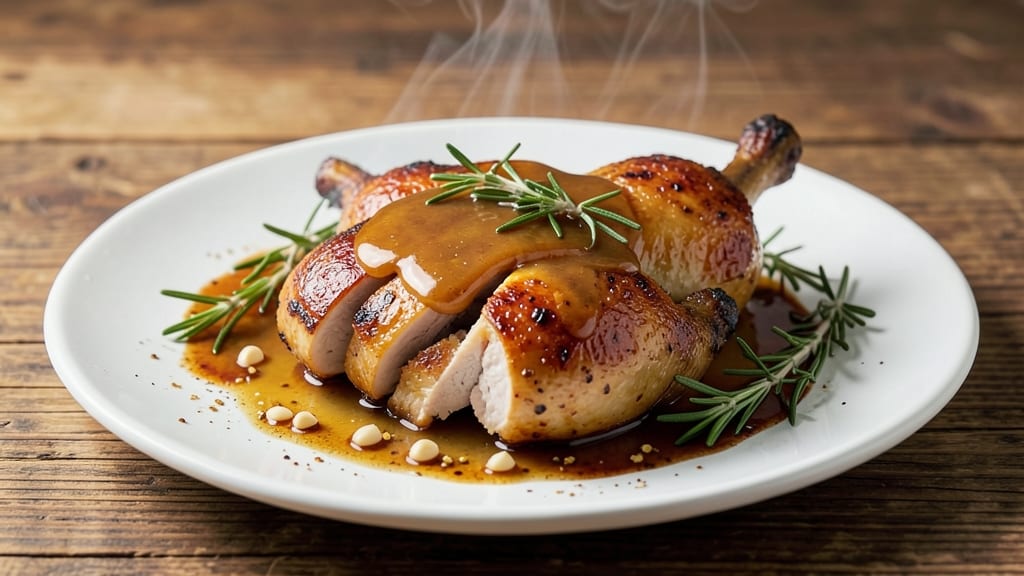
This baked chicken thigh sauce recipe transforms simple pan drippings into a smoky garlic-herb pan gravy that elevates every bite.
The secret lies in deglazing the pan with white wine and chicken broth, then reducing it into a glossy, aromatic sauce packed with herbs, garlic, and a touch of mustard for depth.
I developed this sauce after realizing how much flavor gets wasted when baking chicken thighs—now you can capture every drop.
The magic happens in the reduction process, where the wine and broth meld into a rich, velvety sauce that clings beautifully to both chicken and sides. Fresh thyme and rosemary add earthy complexity, while smoked paprika introduces a subtle smokiness that mimics grilled flavors.
A splash of lemon juice brightens the sauce, balancing the richness without overpowering the natural taste of the chicken.
What you'll end up with is a luxurious pan gravy that's restaurant-quality but takes just 15 minutes to make. It's the perfect finishing touch for baked chicken thighs, turning a simple weeknight dinner into something special.
The sauce thickens as it cools, making it ideal for drizzling over roasted vegetables or mashed potatoes too.
This sauce keeps well in the fridge for up to 5 days, so you can make a big batch and use it throughout the week. The key is reducing it slowly to develop maximum flavor, so don't rush this step—patience pays off in every rich, herby spoonful. Let's get started!
Ingredients for baked chicken thigh sauce
Here's what transforms simple baking drippings into restaurant-quality smoky garlic-herb sauce.
| Ingredient | Amount | Notes |
|---|---|---|
| Chicken Thigh Drippings 🍗 | 2 tbsp | From baking 4 thighs |
| Dry White Wine 🍷 | ¼ cup | Sauvignon Blanc preferred |
| Chicken Broth 💧 | ¼ cup | Low-sodium preferred |
| Fresh Thyme Leaves 🌿 | ¼ cup | Finely chopped |
| Fresh Rosemary 🌿 | 1 tbsp | Finely chopped |
| Garlic Cloves 🧄 | 4 cloves | Minced |
| Smoked Paprika 🌶️ | 1 tsp | For smoky depth |
| Dijon Mustard 🍯 | 1 tsp | For tangy richness |
| Lemon Juice 🍋 | 1 tbsp | Freshly squeezed |
| Unsalted Butter 🧈 | 1 tbsp | For finishing |
| Salt 🧂 | ½ tsp | Kosher preferred |
| Ground Black Pepper 🌶️ | ¼ tsp | Freshly ground |
The wine and broth are non-negotiable here. Sauvignon Blanc works best—it's crisp and won't overpower the herbs. Skip the cooking wine aisle; grab a bottle you'd actually drink. For broth, low-sodium is key so you control the salt. Fresh thyme and rosemary make all the difference—Trader Joe's sells pre-bundled sprigs, which saves time. If you're using dried herbs, cut the amount to one-third since they're less potent. The garlic? Freshly minced is best, but jarred works in a pinch if you're in a hurry.
No white wine? Substitute with extra chicken broth plus a splash of apple cider vinegar—it adds brightness. Dried thyme and rosemary work, but reduce to one-third the amount of fresh. Smoked paprika can be swapped for regular paprika, but you'll lose that grilled flavor. Dijon mustard is crucial for depth—yellow mustard won't cut it. The butter at the end is optional but adds incredible richness. If you skip it, just whisk in a little more drippings or broth to emulsify the sauce.
This sauce is best made fresh, but it keeps beautifully in the fridge for 5 days in an airtight container. For longer storage, freeze in ice cube trays—perfect for single servings. Reheat gently on the stove, adding a splash of broth or water if it thickens too much. The sauce actually gets better as it cools, so make extra for leftovers. Trust me, you'll want seconds.
Why You'll Love This Recipe
- Uses What You Have: I swear by this sauce because it turns scraps into gold—just let those chicken thigh drippings simmer with white wine and broth, and suddenly you’ve got something restaurant-worthy. No fancy ingredients, just what’s already in your fridge.
- Deep, Savory Umami: That first sip of sauce—where the wine cuts through the richness and the thyme and rosemary weave in like a secret handshake—is chef’s kiss. It’s the kind of flavor that makes you pause mid-bite, even if your kitchen looks like a warzone afterward.
- Weeknight to Dinner Party: Honestly, this sauce is my lazy-but-impressive trick: toss it on roasted thighs for a Tuesday, drizzle it over pasta for guests, or even use it to deglaze a pan for a quick sauce later. It’s the Swiss Army knife of sauces, and I’m not ashamed to admit it.
- Leftovers That Don’t Suck: Between us, most sauces turn into sad, watery glop when reheated. Not this one. The wine and herbs keep it bright, and the drippings make it taste even better the next day—perfect for meal prep or when you’re too tired to cook. (Yes, even on a Tuesday night.)
Step-by-step instructions for smoky garlic-herb pan gravy
Transform those golden chicken thigh drippings into a rich, aromatic sauce that will elevate your meal.
Deglaze the Pan with White Wine
After removing the baked chicken thighs from the pan, place it over medium heat. Immediately pour in the 0.25 cup dry white wine and scrape vigorously with a wooden spoon, focusing on the browned bits at the bottom. These bits are packed with flavor—don't miss them.
The wine should bubble vigorously for about 2 minutes until it reduces by half and the alcohol smell dissipates. You'll notice the liquid turning slightly cloudy as it begins to thicken. This step is crucial—it forms the base of your sauce and removes any raw alcohol flavor.
Build the Herb and Garlic Foundation
Add the 0.25 cup finely chopped fresh thyme leaves and 1 tablespoon finely chopped fresh rosemary to the pan. Stir for 30 seconds to release their aromatic oils. Then add the 4 minced garlic cloves and cook for another 30 seconds until fragrant.
Here's where it gets fragrant—you'll smell that fresh herb and garlic combination filling your kitchen. The thyme and rosemary should be just wilted, not browned. If you notice the garlic starting to brown too quickly, reduce the heat slightly to medium-low to prevent burning.
Develop the Rich Base
Stir in the 0.25 cup chicken broth, 1 teaspoon smoked paprika, and 1 teaspoon Dijon mustard. Bring to a gentle simmer and cook for 4-5 minutes until the liquid reduces by about one-third. You'll see the sauce thicken noticeably as it cooks down.
The smoked paprika adds depth while the Dijon mustard brings a subtle tang that balances the richness. Stir occasionally to prevent any sticking. If the sauce starts to look too thick before the 4-5 minutes are up, add 1 tablespoon water to help thin it out slightly.
Finish with Butter and Brighten with Lemon
Remove the pan from heat and whisk in the 1 tablespoon unsalted butter and 1 tablespoon freshly squeezed lemon juice. The butter will melt instantly, creating a silky texture. Return to low heat and cook for just 1 minute to let the flavors meld together.
This is where the sauce comes together—you'll notice it becomes glossy and rich. The lemon juice cuts through the richness while adding a bright, fresh note. Taste and adjust seasoning with 0.5 teaspoon salt and 0.25 teaspoon freshly ground black pepper as needed.
Strain and Serve Immediately
For a perfectly smooth sauce, strain through a fine-mesh sieve into a clean saucepan. This removes any herb stems or garlic bits, leaving you with an elegant, velvety gravy. Return to low heat if needed to maintain serving temperature.
Serve immediately over your baked chicken thighs, drizzling generously over each portion. The sauce should coat the back of a spoon with a glossy sheen. If it thickens too much while serving, whisk in 1 tablespoon warm water or broth to reach your desired consistency.
Pro Tips For Making Baked Chicken Thigh Sauce
- DEGLAZE HOT PAN: Let the chicken thighs brown hard—crispy skin sticks to the pan, and that’s gold. When you pull them out, immediately pour in the white wine and let it sizzle for 30 seconds before scraping with a wooden spoon. That’s where the flavor hides.
- SALT THE BROTH: Don’t forget the chicken broth—it’s not just water. Add a pinch of salt (about ¼ teaspoon per cup) and a splash of lemon juice if you’re using store-bought. Flat, bland broth ruins the sauce, and no one wants that.
- STRAIN THE HERBS: After simmering thyme and rosemary, strain them out. I learned this the hard way—chewing on herb stems mid-bite is a dealbreaker. A fine-mesh sieve keeps the flavor without the texture.
- REDUCE LOW AND SLOW: Skip the high heat when thickening the sauce. Let it bubble gently for 10-12 minutes—it’ll coat the back of a spoon without burning. Patience here makes the difference between glossy perfection and a sad, lumpy mess.
Common mistakes when making this dish
Skipping the Deglaze
Never skip deglazing the pan after baking chicken thighs—those browned bits are flavor gold! Without scraping them up with wine, you're missing out on the Maillard reaction flavors that give depth to your sauce.
I've made this mistake, and the result is a pale, weak sauce that lacks complexity. Always use dry white wine—cooking wine has added salt and preservatives that can ruin the balance. 🍷
Using Cooking Wine
Cooking wine is a common shortcut, but it's a game-changer when you use the real stuff. The salt and additives in cooking wine make your sauce taste flat and overly salty.
Instead, grab a bottle of Sauvignon Blanc you'd actually drink—it's crisp, clean, and adds the perfect brightness. If you're concerned about cost, even a small bottle will last for multiple sauces.
Burning the Herbs
Fresh herbs like thyme and rosemary should just wilt—not brown. When they burn, they turn bitter and ruin the delicate flavor profile of your sauce. Keep the heat at medium-low when adding them, and stir constantly for 30 seconds max.
I once let rosemary char in a pan, and the sauce ended up tasting like medicine. Trust me, it's not worth it. 🌿
Rushing the Reduction
The reduction step is where the magic happens, so don't rush it! If you simmer too quickly, the sauce will turn grainy and lose its silky texture. Aim for a gentle simmer over medium-low heat, and let it reduce naturally for 4-5 minutes.
Skipping this step means your sauce will be thin and lack the rich, velvety consistency you're after.
Over-Straining the Sauce
While straining removes herb stems for a smooth finish, over-filtering can also remove some of the flavorful oils and particles that make the sauce rich. Use a fine-mesh sieve and press gently with a spoon to release the good stuff.
If you strain too aggressively, you'll end up with a watery sauce that lacks body. The goal is to remove debris, not all the flavor! 💫
Adding Butter Too Early
Butter is the secret to a luxurious finish, but adding it too early can cause the sauce to separate. Always whisk in the unsalted butter off the heat to prevent curdling.
If you add it while the sauce is still simmering, the butter will separate into greasy lumps instead of emulsifying smoothly. This is a common mistake that ruins the sauce's silky texture.
Nutrition facts
Frequently asked questions
Can I make this sauce without white wine?
Yes! Use 0.25 cup apple cider vinegar plus 0.25 cup extra chicken broth for brightness. The vinegar mimics the acidity of wine while adding fruity depth. For a neutral substitute, try 0.25 cup dry vermouth—it's less acidic than wine but still adds complexity. Just reduce the liquid by half as usual.
How do I adjust the sauce if it's too thick or too thin?
For a thicker sauce, simmer uncovered for 1-2 extra minutes to evaporate more liquid. If it's too thin, whisk in 1 tablespoon cornstarch mixed with 1 tablespoon cold water and cook for 1 minute until it thickens. Never add flour directly to hot sauce—it can create lumps.
Can I use dried herbs instead of fresh?
Use 1 teaspoon dried thyme and 0.5 teaspoon dried rosemary (one-third the amount of fresh). Toast the dried herbs in the pan for 30 seconds before adding other ingredients to wake up their flavors. Skip the straining step since dried herbs won't leave stems behind.
What's the best way to store leftovers?
Let the sauce cool completely, then transfer to an airtight container. It keeps in the fridge for 5 days or freezes for 3 months. For freezing, portion into ice cube trays—thaw and reheat gently with a splash of broth or water to restore smoothness. The sauce actually thickens further when reheated, so thin with liquid if needed.
Can I use this sauce for other proteins?
This sauce works beautifully with duck, pork chops, or even roasted vegetables. For duck, reduce the smoked paprika to 0.5 teaspoon and add 1 teaspoon honey to balance richness. With vegetables, skip the butter and use olive oil instead for a lighter finish. The herb and garlic base remains versatile!