
Main Courses
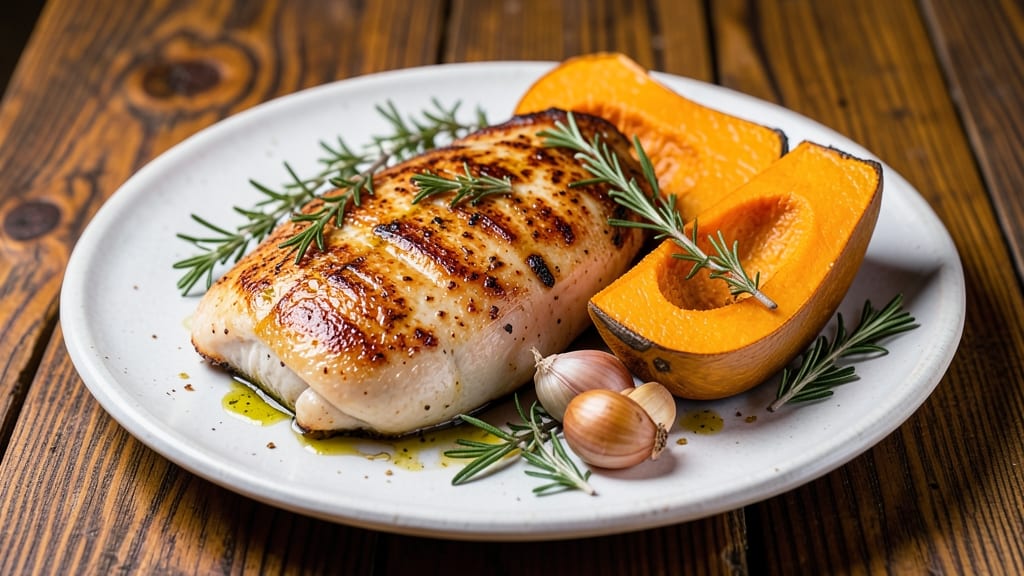
This baked chicken breast and acorn squash recipe transforms weeknight dinner into a restaurant-worthy meal with minimal effort. The secret lies in sealing the chicken with fresh herbs and roasting the squash until caramelized—creating a harmonious balance of savory and sweet flavors that will have everyone asking for seconds. I developed this dish after realizing how often simple, seasonal ingredients could elevate a basic meal without complicated techniques.
The chicken breast remains juicy and tender thanks to a simple herb seal that locks in moisture, while the acorn squash develops a natural sweetness when roasted with just a touch of olive oil and salt.
This method ensures both components cook perfectly in the same oven, making it an efficient and foolproof approach for home cooks. The result is a dish that's both elegant and approachable, perfect for impressing guests or treating yourself to a special meal.
What makes this recipe truly special is how the flavors come together—tender, herb-infused chicken pairs beautifully with the caramelized sweetness of the squash. The dish is balanced enough to stand alone but pairs wonderfully with a simple side salad or crusty bread.
Each bite delivers a satisfying combination of textures and flavors that make this more than just a meal—it's an experience.
Ready in under an hour, this recipe is designed to be simple yet impressive, using only a handful of ingredients that likely already live in your pantry. The technique is straightforward, ensuring consistent results every time.
Whether you're cooking for a family dinner or a quiet night in, this baked chicken and acorn squash dish delivers comfort and sophistication without the fuss.
Ingredients for baked chicken breast and acorn squash
Fresh herbs, seasonal squash, and juicy chicken—simple ingredients for a restaurant-worthy meal.
| Ingredient | Amount | Notes |
|---|---|---|
| Boneless, Skinless Chicken Breast 🍗 | 1 ½ lb | Pounded to even thickness |
| Acorn Squash 🎃 | 1 whole | Halved and seeded |
| Extra-Virgin Olive Oil 🫒 | ½ cup | For roasting and sealing |
| Fresh Rosemary 🌿 | ¼ cup | Chopped, stems removed |
| Fresh Thyme 🌿 | ¼ cup | Leaves only, stems removed |
| Garlic Cloves 🧄 | 4 cloves | Minced for herb seal |
| Salt 🧂 | 1 tsp | Kosher or sea salt |
| Black Pepper 🌶️ | ½ tsp | Freshly ground preferred |
| Honey 🍯 | 1 tbsp | For glaze (optional) |
| Balsamic Vinegar 🍶 | 1 tbsp | For drizzling |
| Fresh Parsley 🌿 | ¼ cup | Chopped for garnish |
The chicken breast is key here. Look for evenly sized breasts—similar thickness ensures even cooking. Trader Joe's and Whole Foods often carry high-quality, uniform cuts. Pounding the breasts to about 1/2-inch thickness guarantees they cook through without drying out. Fresh herbs make all the difference—rosemary and thyme from the grocery store's produce section work, but if you can grab them from a farmers market, the flavor will be even brighter. The acorn squash should feel heavy for its size, indicating ripeness. A sharp chef's knife makes halving and seeding it easier, and don't skip the seeds—they're edible and add a nutty flavor if you roast them separately.
No fresh rosemary? Dried rosemary works at one-third the amount, but it won't have the same aroma. Substitute thyme with oregano or marjoram if needed, though the flavor will shift slightly. For the herb seal, garlic powder can replace fresh garlic in a pinch, but the texture won't be as rich. If you're avoiding honey, a drizzle of maple syrup works beautifully instead. The balsamic vinegar adds depth—aged balsamic from Trader Joe's or Whole Foods has the best flavor. For the squash, if you can't find acorn squash, butternut or kabocha will work just as well. Just adjust the roasting time—smaller squashes cook faster.
Store the chicken and squash separately in the fridge until ready to cook. The herb seal can be prepped up to 24 hours ahead—just keep it refrigerated. Once roasted, the chicken stays juicy for 3-4 days in the fridge, while the squash keeps for 5-6 days. For leftovers, reheat gently in the oven to maintain moisture. The squash reheats beautifully—just cover with foil and warm at 350°F for 10-15 minutes. If you're prepping ahead, roast the squash first and store it separately. The chicken can be sealed and refrigerated until ready to bake, making this a great make-ahead meal.
Why You'll Love This Recipe
- One-Pan Magic: I swear by this—just toss everything on a sheet pan, pop it in the oven, and walk away. The chicken and squash roast together while I’m scrolling through my phone (or, let’s be honest, pretending to work).
- Herb-Crisp Perfection: That rosemary and thyme? They cling to the chicken like a cozy blanket, while the squash caramelizes into sweet, buttery strands. The crispy edges on the chicken? Chef’s kiss—no fancy marinade needed.
- Meal-Prep MVP: Between us, this is my go-to for lunches all week. The squash holds up beautifully, and the chicken stays juicy—no sad, dry leftovers here. I’ll often double the batch just to have it ready.
- Budget Bright Spot: Acorn squash is cheaper than you’d think, and chicken breast stretches further than you’d expect when paired with its sweet, fibrous friend. Plus, fresh herbs feel fancy without breaking the bank—just a few sprigs go a long way.
Step-by-step instructions for baked chicken breast and acorn squash
This method delivers perfectly herb-sealed chicken with caramelized acorn squash—every bite balances savory and sweet.
Prep and Season the Chicken
Begin by pounding the 1.5 lb boneless, skinless chicken breast between two sheets of plastic wrap to an even ½-inch thickness using a meat mallet. This ensures even cooking and prevents dryness. Season both sides generously with 1 tsp salt and ½ tsp black pepper, pressing the seasoning into the meat so it adheres.
Next, create the herb seal by combining ¼ cup chopped fresh rosemary, ¼ cup fresh thyme leaves, 4 minced garlic cloves, and ¼ cup extra-virgin olive oil in a small bowl. Mix well to form a paste. Spread this mixture evenly over the seasoned chicken, covering it completely. This herb seal will create a flavorful crust while keeping the chicken juicy.
Roast the Acorn Squash
Preheat your oven to 400°F. Cut the whole acorn squash in half lengthwise and scoop out the seeds using a spoon. Brush the cut sides with 2 tbsp extra-virgin olive oil, then sprinkle lightly with ½ tsp salt. Place the squash halves cut-side down on a parchment-lined baking sheet.
Roast for 35-40 minutes until the flesh is tender and easily pierced with a fork. The edges should be slightly caramelized, and the squash should yield to gentle pressure. Remove from the oven and let it rest for 5 minutes before serving—this prevents the squash from falling apart when sliced.
Bake the Herb-Sealed Chicken
While the squash roasts, place the herb-sealed chicken on a separate parchment-lined baking sheet. Bake at 400°F for 20-25 minutes, or until the internal temperature reaches 165°F. The herb seal will form a golden-brown crust, and the chicken will be juicy and fully cooked.
For extra flavor, drizzle the chicken with 1 tbsp honey and 1 tbsp balsamic vinegar during the last 5 minutes of baking. This glaze adds a subtle sweet-tangy contrast that complements the herbs. Let the chicken rest for 5 minutes before slicing to retain its juices.
Assemble and Garnish
Slice the roasted acorn squash into ½-inch thick wedges and arrange on a serving platter. Top the squash with the sliced chicken breast, ensuring each serving has both components. Drizzle any remaining pan juices from the chicken over the top for added moisture and flavor.
Garnish with ¼ cup chopped fresh parsley for a pop of color and freshness. Serve immediately while the chicken is warm and the squash is still tender. The herb seal on the chicken pairs beautifully with the natural sweetness of the roasted squash, creating a balanced and satisfying meal.
Pro Tips For Making Baked Chicken Breast And Acorn Squash
- Pound Chicken Evenly: Grab a meat mallet and tap each breast to a consistent ½-inch thickness—no thick spots. I used to skip this, and half my chicken always ended up dry while the other half was undercooked. A few firm whacks solves that forever.
- Halve Squash Before Roasting: Cut the acorn squash in half lengthwise, scoop out seeds, then slice into ½-inch wedges for even cooking. Whole halves take forever to soften, and the edges burn before the center gets tender. (Yes, even if it looks messy—it’s worth it.)
- Salt Chicken First, Wait: Season the chicken at least 30 minutes before baking—or overnight if you’re organized. The salt needs time to penetrate, and fresh herbs like rosemary and thyme stick better. I learned this after my chicken tasted bland no matter how much I sprinkled at the last second.
- Roast Squash Separately: Toss the squash wedges with olive oil and herbs, then roast them 10 minutes ahead of the chicken at 400°F (425°F if you’re impatient). They’ll caramelize beautifully without steaming while the chicken cooks. (Pro move: Flip them halfway.)
Pro cooking tips for this dish
Herb Seal Mastery
The herb seal is what keeps this chicken juicy and packed with flavor. Start by pounding the chicken to an even ½-inch thickness—this ensures it cooks uniformly.
I use a meat mallet (like the OXO Good Grips one) for this step, as it gives me better control than a rolling pin. The key is to press just hard enough to even out the thickness without tearing the meat. 💪
For the seal, I blend fresh rosemary, thyme, and garlic with olive oil into a paste. This isn’t just seasoning—it’s a flavor lock that creates a crust while keeping moisture inside.
If you’re short on time, dried herbs work in a pinch, but reduce them to ⅓ the amount (so ⅛ cup dried rosemary instead of ¼ cup fresh). The garlic is non-negotiable, though—it’s the backbone of the flavor profile.
Acorn Squash Caramelization
Roasting acorn squash at 400°F brings out its natural sweetness, but the real magic happens when the edges caramelize. I like to brush the cut sides with extra-virgin olive oil (like California Olive Ranch) and sprinkle just ½ tsp salt—no need to overdo it.
The squash should be tender when pierced with a fork, but still hold its shape. If you’re worried about it falling apart, roast it cut-side up instead of down for easier slicing later.
For extra depth, I sometimes add a pinch of cinnamon (about ¼ tsp) to the squash before roasting. It pairs beautifully with the squash’s natural nuttiness and adds a warm, aromatic note.
Just don’t skip the 5-minute rest after roasting—this lets the juices redistribute, making every bite more flavorful. ⏱️
Temperature Precision
Your oven’s temperature is critical here. I always preheat for at least 15 minutes to ensure it’s truly at 400°F—no shortcuts! Use an oven thermometer (like the Thermoworks Oven Thermometer) to double-check, as many home ovens run hot or cold.
The chicken is done when it hits 165°F internally, but I pull it out at 160°F to account for carryover cooking. This keeps it juicy without overcooking.
For the honey-balsamic glaze, I add it in the last 5 minutes of baking. This isn’t just for flavor—it also helps create a glossy finish on the chicken.
If you’re baking the chicken and squash together (which I don’t recommend due to different cook times), use two separate baking sheets on the same rack to avoid flavor transfer. A wire cooling rack helps with this—just place the chicken on it while it rests to prevent sogginess. 🔥
Resting for Juiciness
Letting the chicken rest for 5 minutes before slicing is one of the most underrated steps. During this time, the juices redistribute from the center to the edges, so you don’t end up with dry meat. I cover the chicken loosely with foil to keep it warm while it rests.
For the squash, the 5-minute rest is just as important—it prevents the flesh from tearing when you slice it. If you’re short on time, even 3 minutes makes a difference.
Pro tip: If you’re serving this dish ahead of time, reheat the chicken in a 350°F oven for 10 minutes (covered with foil) to keep it moist.
The squash reheats well too—just warm it covered with foil for 10-15 minutes at the same temperature. This ensures both components stay tender and delicious. 💡
Nutrition facts
Frequently asked questions
Can I substitute acorn squash with another winter squash?
Butternut or kabocha squash work beautifully as substitutes—they have similar sweetness when roasted. Just adjust the roasting time: smaller squashes (like 1 lb butternut) may cook in 25-30 minutes while larger ones need 40-45 minutes. The texture will be slightly different but equally delicious.
How do I keep the chicken breast from drying out?
Pounding to ½-inch thickness and using the herb seal are key! Also, never skip the 5-minute rest after baking—this lets juices redistribute. For extra moisture, brush the chicken with 1 tsp olive oil before baking. If your breasts vary in size, cut the thicker ones to match the thinner pieces.
Can I make this recipe in a slow cooker?
Not ideal for the squash (it needs high heat to caramelize), but you can adapt the chicken! Place the herb-sealed breasts in the slow cooker with ¼ cup broth or water, cover, and cook on Low for 3-4 hours or High for 2 hours. The result will be tender but less crispy than baked. Serve with store-bought roasted squash or make it separately.
What's the best way to reheat leftovers?
Reheat chicken and squash separately to prevent sogginess. Place chicken on a baking sheet at 350°F for 10 minutes (covered with foil), and squash at 375°F for 15 minutes (also covered). For microwave reheating, use 30-second intervals on medium power, adding water to the plate to steam the squash gently.
Can I use dried herbs instead of fresh?
Yes, but reduce amounts to ⅓ (so ⅛ cup dried rosemary instead of ¼ cup fresh). Dried herbs lack moisture, so mix them with 1 tbsp olive oil to create a paste before applying. The flavor will be less vibrant but still delicious. For best results, use fresh herbs when possible—they make a noticeable difference!