
Main Courses
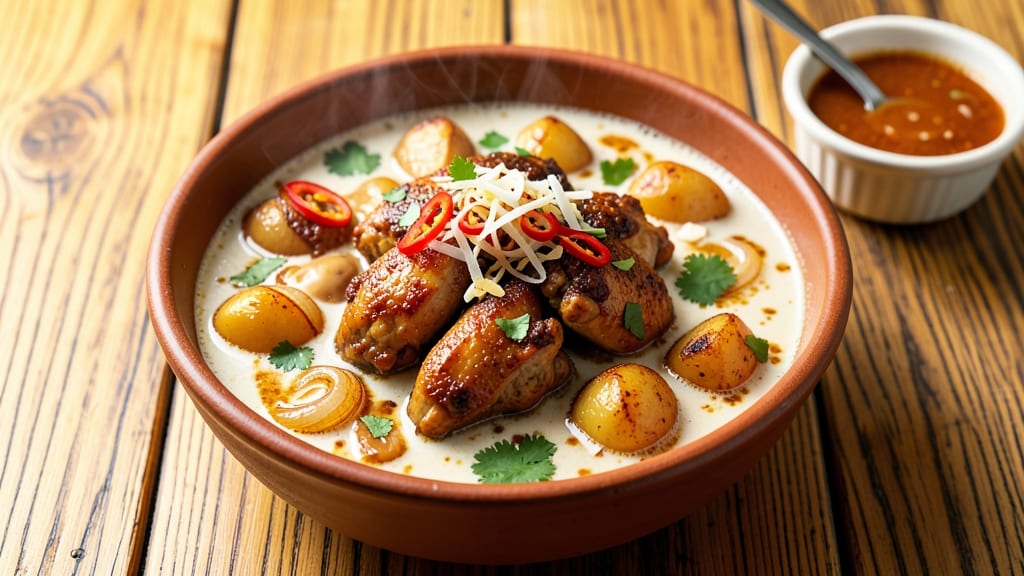
This authentic Thai Massaman chicken curry delivers the rich, nutty depth of traditional Thai cuisine in one comforting bowl. ✨ The secret lies in slow-simmered peanut butter, tender potatoes, and a carefully layered spice blend that balances sweet, savory, and aromatic notes—just like the curry you'd find in a Bangkok street-side restaurant.
What sets this recipe apart is the authentic technique of reducing coconut milk to intensify its flavor before adding peanut butter and potatoes.
This slow-cooked method transforms tough chicken into melt-in-your-mouth pieces while building a sauce that's creamy yet complex, with just the right amount of heat from massaman curry paste. Every bite delivers that perfect harmony of textures and tastes.
The result is a restaurant-quality curry with tender chicken, hearty potatoes, and a velvety sauce that clings to every ingredient. The aroma alone—warm spices, toasted peanuts, and fragrant coconut—will have your kitchen smelling like a bustling Thai market.
Serve it with steamed jasmine rice to soak up every last drop of that rich, flavorful sauce.
This dish is perfect for a cozy weeknight dinner or an impressive meal for guests, and it keeps well for leftovers. Let's get cooking!
Ingredients for authentic thai massaman chicken curry
Authentic Thai flavors start with these carefully chosen ingredients for a rich, nutty curry experience.
| Ingredient | Amount | Notes |
|---|---|---|
| Boneless Chicken Thighs 🍗 | 1 ½ lb | Skin-on preferred for flavor |
| Coconut Milk 🥥 | 1 can | Full-fat, 13.5 oz can |
| Massaman Curry Paste 🌶️ | 3 tbsp | Authentic Thai brand preferred |
| Peanut Butter 🥜 | ½ cup | Creamy, unsweetened |
| Russet Potatoes 🥔 | 2 medium | Peeled, cut into 1-inch cubes |
| Sweet Onions 🧅 | 1 medium | Thinly sliced, yellow or red |
| Fresh Galangal 🍃 | 2 inches | Peeled, sliced (or ginger substitute) |
| Cinnamon Sticks 🌿 | 2 whole | For aromatic depth |
| Star Anise 🌟 | 2 whole | Lightly crushed |
| Cardamom Pods 🌿 | 4 whole | Lightly crushed |
| Light Brown Sugar 🍯 | ¼ cup | Packed firmly |
| Vegetable Oil 🫒 | 2 tbsp | For sautéing |
| Salt 🧂 | 1 ½ tsp | Diamond Crystal preferred |
| Black Pepper 🌶️ | ½ tsp | Freshly ground |
The Massaman curry paste is non-negotiable for authentic flavor—Thai Kitchen brand or Maesri from Asian markets deliver the best results. Fresh galangal (available at specialty stores or online) adds a citrusy, peppery depth, but ginger works in a pinch if you can't find it. For the coconut milk, full-fat is essential—light versions won't create that luxurious texture. Russet potatoes hold up best to slow cooking, and sweet onions add natural sweetness without overpowering the dish. If you're using ginger as a substitute, double the amount of galangal called for in the recipe.
No Massaman curry paste? Garam masala plus a pinch of cinnamon gets you closer, though it lacks the authentic depth. Peanut butter should be creamy and unsweetened—natural peanut butter can make the sauce grainy. Brown sugar is key for that perfect balance of sweet and savory; white sugar works but lacks molasses notes. Star anise and cardamom are available in bulk at Penzeys Spices or the international aisle of most grocery stores. If you can't find whole spices, ground versions at half the amount will work, though texture will differ slightly. The chicken thighs should be skin-on for maximum flavor—bone-in thighs stay juicier during the long simmer.
This curry tastes even better the next day as flavors meld. Store in an airtight container in the fridge for up to 4 days or freeze portions for 3 months. The sauce thickens as it cools, so add a splash of coconut milk when reheating if needed. For meal prep, double the batch—the extra sauce freezes beautifully for quick future meals. Jasmine rice is traditional, but brown rice or naan also pair wonderfully. The aroma alone will have your kitchen smelling like a bustling Bangkok street market.
Why You'll Love This Recipe
- One-Pot Magic: I swear by this recipe—just toss everything into a single pot, stir, and let it simmer. No chopping boards full of mess, no extra dishes to wash. That peanut butter and curry paste blend into this unreal sauce while the potatoes soften right in the same liquid.
- Sweet-Savory Bang: The moment the Massaman paste hits the pan, your kitchen smells like a Thai street stall. Rich, caramelized notes from the curry paste play with the peanut butter’s creaminess, while the potatoes soak up the flavor like sponges. It’s the kind of dish that makes you pause mid-bite.
- Leftovers for Days: This curry actually tastes better the next day—yes, really. I double the batch on Sundays, and by Wednesday, I’m still reaching for it. The chicken stays tender, the sauce thickens just right, and it reheats like a dream. (Pro tip: freeze half for when you’re too tired to cook.)
- Budget-Friendly Luxury: Chicken thighs and potatoes stretch this recipe far without breaking the bank. A single jar of Massaman paste (or even homemade) transforms simple ingredients into something restaurant-worthy. Here’s what sold me—it’s the kind of meal that feels fancy but costs less than takeout.
Step-by-step instructions for authentic Thai Massaman chicken curry
Master this rich, aromatic curry with a perfect balance of spice and sweetness.
🍳 Step 1: Sauté Aromatics Until Fragrant
Heat the 2 tablespoons vegetable oil in a heavy-bottomed pot over medium heat. Add the 2 inches fresh galangal (or ginger substitute), 2 whole cinnamon sticks, 2 whole star anise, and 4 whole cardamom pods. Sauté for 2-3 minutes until the galangal releases its citrusy aroma and the spices begin to sizzle gently.
Next, add the 1 medium sweet onions and cook for 5-6 minutes until softened and translucent. Here's the thing—don't rush this step. The onions should caramelize slightly at the edges, building deep flavor. If they brown too quickly, reduce heat to medium-low to prevent burning.
🍳 Step 2: Build the Curry Base with Massaman Paste
Increase heat to medium-high and add the 3 tablespoons massaman curry paste. Stir continuously for 1-2 minutes until the raw taste disappears and the paste darkens slightly. This paste contains complex spices that need time to bloom—don't skip this step or your curry will taste bitter.
Add the 0.25 cup light brown sugar and stir for another 30 seconds until dissolved. The sugar will help balance the heat while adding caramelized depth. I like to press the sugar into the paste with a wooden spoon to ensure even distribution throughout the aromatic oil.
🍳 Step 3: Cook the Chicken Until Golden
Push the aromatics to one side of the pot and add the 1.5 lb boneless chicken thighs to the empty space. Cook for 4-5 minutes until the chicken develops a golden crust on all sides. Here's where it gets important: don't overcrowd the pan—this prevents proper browning. If needed, work in batches.
Once the chicken is golden, add 1 cup of the coconut milk (reserve the remaining 1 cup for later) and scrape up any browned bits from the bottom. These bits are packed with flavor—don't let them go to waste. Stir and let the mixture simmer for 3-4 minutes until the coconut milk begins to thicken slightly.
🥘 Step 4: Simmer with Potatoes and Peanut Butter
Add the 2 medium russet potatoes (cut into 1-inch cubes) and the remaining 1 cup coconut milk. Stir gently to combine, then add 0.5 cup peanut butter and 1.5 teaspoons salt. The peanut butter will create that signature creamy texture, but it's crucial to add it gradually—too much at once can make the curry too thick.
Bring the mixture to a gentle simmer, then reduce heat to low. Cover and let it cook for 35-40 minutes, stirring occasionally, until the chicken is tender and the potatoes are fork-tender. You'll know it's ready when the sauce clings to the back of a spoon with a glossy sheen.
⏰ Step 5: Finish with Pepper and Rest
Remove the pot from heat and stir in the 0.5 teaspoon black pepper. Let the curry rest for 5 minutes before serving—this allows the flavors to meld completely. The curry should be rich, aromatic, and perfectly balanced between sweet, spicy, and savory notes.
Serve immediately with steamed jasmine rice to soak up every last drop of that luscious sauce. The potatoes should be tender but still hold their shape, and the chicken should be juicy with just a hint of pink in the center. This is where authentic Thai Massaman shines—complex, comforting, and utterly satisfying.
Pro Tips For Making Authentic Thai Massaman Chicken Curry
- Brown the Paste First: Skip the lazy step of tossing paste straight into coconut milk—sauté it in oil for 2-3 minutes until fragrant and slightly darkened. After burning three batches where the curry tasted flat, I finally realized the paste’s spices need time to bloom, not just simmer. Use medium heat, and resist the urge to stir constantly (it’ll burn before it browns).
- Cut Potatoes Evenly: Uniform 2-inch chunks guarantee potatoes cook through without turning to mush or staying raw. I learned this the hard way when my first batch had some falling apart and others still crunchy—uneven cuts are the enemy. A chef’s knife and a ruler (yes, really) make this foolproof.
- Simmer, Don’t Boil: Once the coconut milk hits the pot, keep the heat at a bare simmer—gentle bubbles, not rolling. I was skeptical until I tried it: boiling splits the milk into a greasy mess, and the curry tastes thin. Let the potatoes and chicken poach slowly for 20-25 minutes; patience here is non-negotiable.
- Stir in Peanut Butter Last: Add the peanut butter with the chicken thighs in the final 5 minutes, not at the start. I used to mix it in early, thinking it would blend better, but it always separated or made the curry taste raw. The heat from the chicken and potatoes will emulsify it perfectly—just give it a quick stir at the end.
Wine and beer pairings for this recipe
Thai White Wine Pairings
The creamy, nutty richness of Massaman curry calls for crisp white wines that won't overpower its complex flavors. I always reach for a Thai Riesling from Chateau Thai—its bright acidity and citrus notes cut through the peanut butter's richness while complementing the coconut milk's sweetness.
A Thai Gewürztraminer also works beautifully, especially if your curry has a touch of heat—its lychee and rose aromas mirror the dish's aromatic spices. 🍷
Light Beer Options
For beer lovers, a Thai lager like Singha or Leo is my go-to choice. Their subtle malt sweetness and clean finish balance the curry's bold flavors without competing.
If you prefer craft beers, a Belgian witbier (like Hoegaarden) adds a refreshing citrus twist that enhances the galangal and lime notes in the curry. Avoid heavy IPAs—they'll drown out the delicate spices.
Red Wine Exception
While white wines dominate, a light-bodied Thai red like Cabernet Sauvignon from Thailand can work if you prefer red. Look for ones with low tannins—I recommend Chateau Landon's Thai Cabernet.
The fruit-forward profile pairs surprisingly well with the peanut butter and potatoes, especially if your curry leans slightly sweeter. Just avoid bold, oak-heavy reds—they'll clash with the coconut milk's creaminess. 🍇
Non-Alcoholic Pairings
For a refreshing non-alcoholic option, I love Thai iced tea from Thai Tea brand—its sweet, tannin-rich profile balances the curry's richness perfectly. Alternatively, a sparkling lime soda (like San Pellegrino Aranciata Rossa) adds a citrusy lift that mirrors the galangal's peppery notes.
Both options keep the meal light and refreshing without overpowering the dish's authentic flavors.
Serving Temperature Tips
Serve white wines and beers chilled but not ice-cold—around 45-50°F for whites and 40-45°F for lagers. This temperature range preserves their aromatic qualities while enhancing the curry's warmth. I always let my wine breathe for 10 minutes before pouring to fully awaken its flavors.
Pro tip: Use a wine aerator if you're serving red—it softens the tannins and makes them more approachable with this rich dish. ✨
Nutrition facts
Frequently asked questions
Can I substitute Massaman curry paste with other curry pastes?
While Massaman curry paste is essential for authentic flavor, you can use red curry paste in a pinch—but expect a different profile. Red curry has more heat and less sweetness, so reduce the brown sugar to 1 tablespoon and add ½ teaspoon more salt to balance. For a milder version, mix 2 tbsp Massaman paste with 1 tbsp garam masala and ¼ tsp cinnamon.
Why does my curry taste bitter? What went wrong?
Bitterness usually means the spices burned or the paste wasn't cooked long enough. Always sauté the Massaman paste for 1-2 minutes until it darkens—this removes raw flavors. If the curry is already cooked, balance the bitterness by adding 1-2 tbsp more peanut butter or a pinch of sugar to sweeten. Avoid adding more coconut milk, as it can make the sauce watery.
Can I make this curry with chicken breast instead of thighs?
Yes, but chicken breasts require extra care to stay tender. Use 1.5 lb boneless, skinless breasts and cut them into 1-inch chunks for even cooking. Add them to the pot after the potatoes (not at the start) and simmer for only 15-20 minutes uncovered—overcooking will dry them out. For extra moisture, stir in 2 tbsp coconut milk at the end.
How do I make this curry spicier?
For more heat, add ½ teaspoon chili flakes or 1-2 fresh Thai chilies (seeds included) when sautéing the aromatics. If using dried chilies, start with ¼ teaspoon and adjust to taste. For a smoky kick, add ½ teaspoon smoked paprika with the Massaman paste. Always taste as you go—spices intensify during simmering!
What’s the best way to reheat leftovers?
Reheat gently in a pot over low heat with 2-3 tbsp water or coconut milk to prevent drying. For microwave reheating, cover with a damp paper towel and heat in 30-second intervals, stirring between each. The sauce may thicken—thin with a splash of coconut milk if needed. Never reheat uncovered, as it can make the peanut butter separate.