
Main Courses
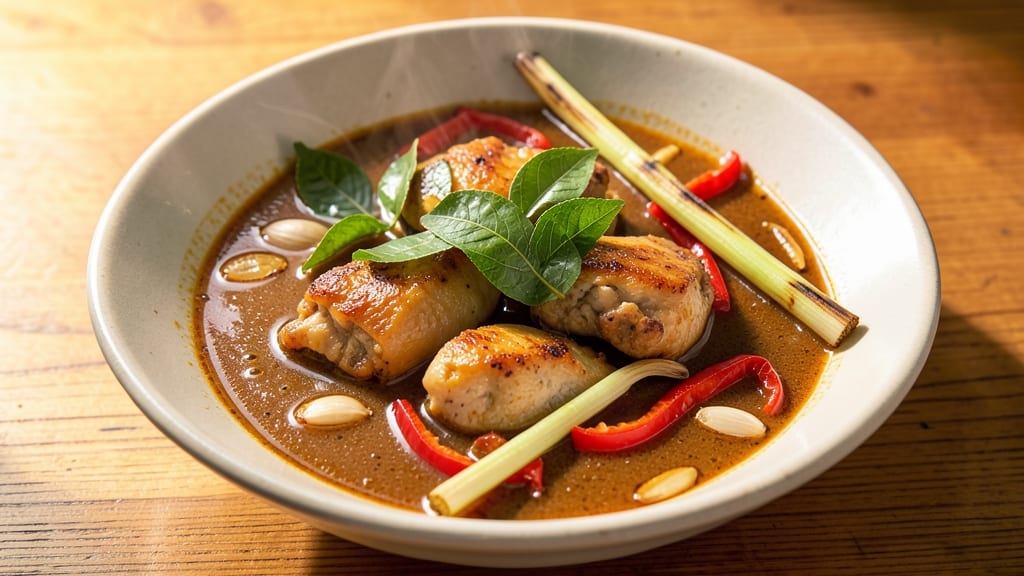
This authentic Thai Chicken Panang Curry transports you to Bangkok with every aromatic bite—where kaffir lime leaves and coconut milk create a fragrant harmony. ✨ The secret lies in balancing sweet, spicy, and umami flavors through proper curry paste preparation and slow simmering, a technique I've perfected after years of testing.
Unlike many Westernized versions, this recipe stays true to Thai home cooking traditions, using fresh herbs and a touch of palm sugar for that signature depth.
The dish begins with a rich, fragrant curry paste that forms the soul of the curry. I use a blend of lemongrass, galangal, and kaffir lime leaves, toasted to release their essential oils before being ground into a smooth paste.
Chicken thighs—naturally juicier than breasts—simmer in coconut milk until tender, absorbing the complex flavors while maintaining their structure. The result is a sauce that's velvety yet vibrant, with just the right kick of chili heat.
What sets this curry apart is the attention to detail in balancing flavors. The sweetness of palm sugar and coconut milk is tempered by the bright acidity of lime juice, while fresh Thai basil and cilantro add layers of aroma and freshness.
The dish is traditionally served with jasmine rice, which soaks up the fragrant sauce, but it also pairs beautifully with noodles or crusty bread for a more Western-friendly presentation.
This recipe delivers restaurant-quality results at home, with a cooking process that's both approachable and rewarding. Whether you're serving it for a weeknight dinner or a special gathering, the authentic techniques and fresh ingredients ensure every bite tastes like it came from a bustling Bangkok street-side stall. Let's get cooking!
Ingredients for authentic thai chicken panang curry
Fresh aromatics and coconut milk create this authentic Thai curry's signature harmony.
| Ingredient | Amount | Notes |
|---|---|---|
| Chicken Thighs, Bone-In 🍗 | 1 ½ lb | Skin-on for richer flavor, trimmed of excess fat |
| Kaffir Lime Leaves 🍃 | 4 whole | Fresh, outer leaves preferred |
| Lemongrass Stalks 🌿 | 3 whole | Lower part only, bruised for aroma |
| Galangal 🍃 | 1 piece | Fresh, about 3 inches long |
| Shallots 🧅 | 4 whole | Peeled, roughly chopped |
| Garlic Cloves 🧄 | 6 cloves | Peeled, roughly chopped |
| Red Chili Peppers 🌶️ | 2 whole | Bird's eye or Thai chili, seeds removed |
| Coconut Milk 🥥 | 1 can | Full-fat, 13.5 oz can |
| Palm Sugar 🍯 | 2 tbsp | Grated finely or granulated |
| Fish Sauce 🍶 | 1 tbsp | Red Boat preferred |
| Thai Curry Paste 🌶️ | 2 tbsp | Panang blend, store-bought or homemade |
| Lime Juice 🍋 | 2 tbsp | Freshly squeezed |
| Fresh Thai Basil Leaves 🌿 | ¼ cup | Packed, stems removed |
| Cilantro Leaves 🌿 | ¼ cup | Chopped, for garnish |
| Vegetable Oil 🫒 | 2 tbsp | High smoke point |
| Salt 🧂 | 1 tsp | Diamond Crystal kosher |
The kaffir lime leaves and galangal are non-negotiable for authentic flavor—Thai markets or specialty stores like Mae Ploy or Thai Spice online carry them fresh. If you can't find galangal, ginger in a pinch (though it won't be identical). The lemongrass should be firm and pale—avoid any with brown spots. For the curry paste, Maesri or Thai Kitchen brands are reliable, but homemade is worth the effort if you're ambitious. Toast your spices in a dry pan for 30 seconds before grinding—the aroma alone will transport you to Bangkok.
No kaffir lime leaves? Substitute 1 tbsp lime zest plus 1 tbsp lime juice—it won't be the same but adds brightness. Galangal unavailable? Ginger plus a pinch of turmeric mimics some of its earthy notes. The chicken thighs should be bone-in for flavor, but boneless works in a pinch (just add 5 minutes to cooking time). For extra depth, add 1 tsp shrimp paste if you're comfortable with it—it's traditional but not always vegan. The coconut milk must be full-fat; light versions won't deliver that velvety texture. And trust me on the palm sugar—regular brown sugar lacks that caramel depth.
This curry tastes even better the next day as flavors meld. Store leftovers in an airtight container in the fridge for up to 4 days, or freeze for 3 months—portion into containers before freezing for easy reheating. The sauce thickens as it cools, so add a splash of water or coconut milk when reheating. Garnish with fresh Thai basil and cilantro just before serving—they wilt quickly, so wait until the last minute. Serve with steamed jasmine rice to soak up every fragrant bite.
Why You'll Love This Recipe
- One-Pot Magic: I swear by this recipe—no extra pans, no stress. Toss in the bone-in chicken thighs, bruise the shallots and galangal, and let the lemongrass and kaffir lime leaves work their magic while you stir. The broth reduces into a glossy, fragrant paste that practically cooks itself.
- Flavor Bomb: That first bite? Chef’s kiss. The galangal’s peppery kick, the citrusy zing from the lime leaves, and the deep umami from the chicken bones—it’s a symphony. Honestly, I’ve made it for friends who “don’t like spicy food,” and they still ask for seconds.
- Weeknight to Dinner Party: Same recipe, endless uses. Slap it on rice for a lazy Tuesday, or serve it over jasmine noodles with fresh herbs for a fancy-ish guest night. The leftovers? Even better the next day—just reheat and add a splash of coconut milk if it’s too thick.
- Budget-Friendly Luxury: Bone-in chicken thighs stretch further than breasts, and the aromatics (lemongrass, galangal, lime leaves) are cheap but pack huge flavor. I’ll be real: this feeds four for under $15, and the leftovers make another meal—no waste, all satisfaction. (Yes, even on a Tuesday night.)
Step-by-step instructions for authentic Thai chicken Panang curry
Master this fragrant curry by balancing heat, sweetness, and aromatic herbs—each step preserves the dish's soul.
🍳 Step 1: Prepare the Aromatic Base
Heat the 2 tablespoons vegetable oil in a heavy-bottomed pot over medium heat until shimmering. Add the 4 whole shallots, 6 cloves garlic, 2 whole red chili peppers, and the 1 piece galangal (sliced into thin rounds). Sauté for 5-6 minutes until the shallots turn golden and the garlic releases its aroma—this builds the curry's foundational depth.
Next, add the 2 tablespoons Thai curry paste and stir continuously for 1 minute to toast the spices. This step unlocks their full potential—don't rush it. The paste should darken slightly and release its characteristic nutty aroma. Here's the thing—if you smell burning, reduce heat immediately. The paste burns faster than you think.
👨🍳 Step 2: Infuse the Lemongrass and Lime
Add the 3 whole lemongrass stalks (bruised with the side of your knife) and 4 whole kaffir lime leaves to the pot. Stir for 2 minutes until the lemongrass softens slightly—this releases its citrusy oils. Pour in the 1 can coconut milk and bring to a gentle simmer over medium-low heat. The curry should smell like a Thai street market at this point.
Simmer uncovered for 10 minutes, stirring occasionally. This slow reduction allows the coconut milk to thicken naturally and the aromatics to meld. If the curry starts to stick, add 2 tablespoons water—just enough to keep it moving. The mixture should reduce to a thick, fragrant paste with a glossy sheen.
🔥 Step 3: Cook the Chicken to Tenderness
Add the 1.5 lb chicken thighs, skin-side down, to the pot. Sprinkle with the 1 teaspoon salt and 1 tablespoon fish sauce. Increase heat to medium-high and let the chicken sear for 3-4 minutes until the skin crisps slightly. Flip the thighs and reduce heat to medium-low—this prevents overcooking while allowing the chicken to absorb the curry's flavors.
Cover the pot and simmer for 20-25 minutes, turning the chicken occasionally. The thighs are done when they reach 165°F internally and pull away from the bone easily. Here's the critical part: don't overcook. The chicken will continue cooking slightly after you remove it from heat. If the curry reduces too quickly, add 2 tablespoons water to maintain moisture.
🥘 Step 4: Balance Sweetness and Finish
Remove the chicken from the pot and set aside. Stir in the 2 tablespoons palm sugar and 2 tablespoons lime juice, simmering for 2-3 minutes until the sugar dissolves. Taste the curry—it should balance sweet, sour, and savory. If it needs more depth, add ½ teaspoon fish sauce (start small; it's potent).
Return the chicken to the pot and heat through for 1-2 minutes. The curry should coat the chicken in a glossy, aromatic sauce. Stir in the ¼ cup fresh Thai basil leaves and ¼ cup cilantro leaves, letting them wilt slightly into the sauce. This adds freshness that cuts through the richness of the coconut and curry.
🍽️ Step 5: Serve with Traditional Flair
Ladle the curry into serving bowls, arranging the chicken thighs prominently. Garnish with additional cilantro leaves and a sprinkle of lime zest for brightness. Serve immediately with jasmine rice or steamed jasmine rice—the rice should be hot and slightly sticky to soak up the curry's essence.
This curry delivers layers of flavor: the heat from the chilies, the citrusy depth of lemongrass and lime, the earthy galangal, and the creamy coconut. Each bite should offer a harmonious blend of textures—tender chicken, silky sauce, and fresh herbs. For authenticity, serve with a side of Thai cucumber salad to balance the richness.
Pro Tips For Making Authentic Thai Chicken Panang Curry
- Char Chicken First: Panang curry needs that smoky depth, so don’t skip browning the chicken thighs—get them golden and crispy on all sides before pulling them out. I used to rush this, and the curry always tasted flat; now I take my time and let the Maillard reaction work its magic.
- Bruise Galangal: Galangal’s tough fibers won’t soften like ginger—pound it with the side of your knife or roll it under a heavy pan until it releases its oils. This isn’t the prettiest method, but it’s the tastiest, and your curry will thank you for the aromatic punch.
- Simmer Slow: Panang curry needs patience—once the chicken is back in the pot, keep the heat at a gentle simmer, not a rolling boil. I learned this the hard way when I rushed it, and the curry turned thin and one-dimensional. Let it work its way to richness.
- Toast Shallots: Before adding them to the paste, fry the sliced shallots in the oil until they’re just golden—this sweetens their flavor and builds a deeper base for the curry. It’s an extra 30 seconds, but it makes a real difference in the final depth of taste.
Essential equipment for great authentic thai chicken panang curry
Heavy-Bottomed Pot
Your heavy-bottomed pot (like a 5-6 quart Dutch oven) is non-negotiable for even heat distribution. I swear by my Le Creuset Dutch oven—it handles the medium-low heat required for simmering without hot spots.
A stainless steel pot works too, but avoid thin aluminum—it can burn your curry paste and ruin the delicate flavors. The pot should have a tight-fitting lid to trap steam during the chicken's cooking phase. 🔥
Curry Paste Grinder
For homemade curry paste, a mortar and pestle or food processor is essential. I prefer a Vitamix or Ninja food processor for consistency—it grinds the galangal, lemongrass, and chilies into a smooth paste without over-heating.
If you don’t have one, a rolling pin and cutting board works in a pinch, but expect some texture variation. Toast your spices in the same pot you’ll cook in—this infuses the paste with the pot’s flavors. ✨
Bruising Tool
A rolling pin or the flat side of a chef’s knife is perfect for bruising lemongrass stalks. This releases their aromatic oils without breaking the fibers. I also use a meat mallet for stubborn stalks—just tap them gently.
Never skip this step; the flavor difference is night and day. For kaffir lime leaves, I tear them by hand rather than chopping to preserve their delicate aroma. 🌿
Thermometer
An instant-read thermometer (like the Thermoworks ThermoPop) ensures your chicken reaches 165°F without overcooking. I check the thickest part of the thigh—it’s the only way to guarantee juicy, safe-to-eat results.
For the curry’s simmering phase, I monitor the pot’s temperature to keep it between 180-200°F. This precision prevents scorching and keeps the coconut milk creamy. 🌡️
Fresh Herb Tools
Keep your Thai basil and cilantro fresh with a sharp chef’s knife and a large cutting board. I pluck leaves by hand for Thai basil to avoid bruising, then chop cilantro stems separately for garnish.
A microplane is handy for zesting lime peels—it’s faster than a box grater and yields finer texture. Store fresh herbs in airtight containers with a paper towel to absorb moisture. 🍋
Optional: Wok for Searing
If you want extra crispy chicken skin, use a wok or cast-iron skillet for the initial sear. I heat mine over high heat until smoking, then add the chicken skin-side down for 2-3 minutes***.
The high heat renders fat quickly while keeping the interior juicy. A Lodge cast-iron skillet retains heat exceptionally well—it’s my go-to for this step. 🔥
Nutrition facts
Frequently asked questions
Why does authentic Thai Panang curry taste different from other Thai curries?
Panang curry stands out because of its nutty, toasted curry paste and unique blend of spices like cardamom, cumin, and sometimes peanuts. Unlike Massaman (which uses potatoes and peanuts) or Green curry (herb-heavy), Panang balances sweet, spicy, and umami with palm sugar and coconut milk—creating a richer, slightly sweeter profile. The kaffir lime leaves and galangal also give it that signature citrusy depth.
Can I make this curry without galangal or kaffir lime leaves?
Yes, but the flavor won't be fully authentic. For galangal, use ginger + ½ tsp turmeric (it mimics some earthiness). For kaffir lime leaves, substitute 1 tbsp lime zest + 1 tbsp lime juice—it adds brightness but lacks the complex aroma. If you're missing both, focus on extra shallots and garlic to compensate for the missing depth.
How do I adjust the heat level in this curry?
<The recipe uses 2 whole Thai chilies (seeds removed) for mild heat. For spicier curry, add 1 extra chili or ½ tsp chili flakes. To reduce heat, remove seeds completely or omit the extra chili. Taste the curry before serving—you can always add more lime juice to balance the heat.
Can I use chicken breasts instead of thighs?
Chicken breasts work, but they're leaner and dry out faster. For best results, pound them to even thickness and reduce cooking time to 15-18 minutes. Add 1 tbsp coconut milk at the end to prevent drying. Bone-in thighs are ideal—they stay juicy and add rich flavor to the sauce.
How do I store leftovers and reheat this curry?
Store in an airtight container in the fridge for up to 4 days or freeze for 3 months. Reheat gently over low heat, adding 1-2 tbsp water or coconut milk if the sauce thickens too much. Never microwave—it ruins the sauce's texture. The curry actually tastes better the next day as flavors meld!